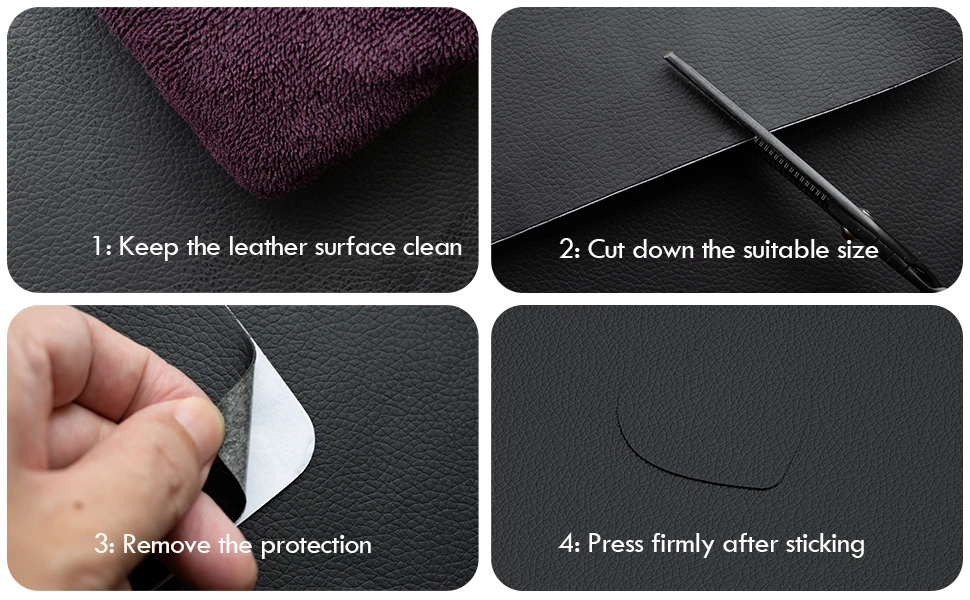
Most DIY leather repairs look like a bad toupee—obvious, ugly, and doomed to fail.
It’s frustrating.
But here’s the truth: professional-grade leather restoration isn\’t a dark art; it’s a series of \”insider\” steps the pros usually keep to themselves.
At Mitcer, we’re tired of seeing premium furniture and car interiors ruined by bad advice and cheap \”miracle\” fixes.
That’s why I’m pulling back the curtain on the 5 secrets to Master DIY Leather Repair Like a Pro.
Whether you\’re dealing with a peeling leather repair or a complex scuff restoration, these techniques will take you from \”amateur patch-job\” to \”factory-fresh finish.\”
If you\’re ready to stop guessing and start restoring your leather with total confidence, you\’re in the right place.
Let’s get to work.
5 Secrets to Master DIY Leather Repair Like a Pro
You’re staring at that crack or tear in your leather sofa, worrying you’ll have to shell out thousands for a replacement. I’ve been there. Most DIYers fail because they rush to the \”pretty\” part—the color. But as a master craftsman, I can tell you that a pro-level finish isn\’t about the paint; it’s about the foundation. Think of leather repair like auto body work: you don\’t spray over grease and expect it to hold.
Secret #1: Surface Degreasing is 90% of the Work
The \”Zero-Residue\” Rule is my golden commandment. Most people grab a standard household cleaner or a dish soap and think a quick wipe-down is enough. That is a rookie mistake. Common cleaners often leave behind silicones, waxes, or surfactants that act as a \”slip\” layer, ensuring your leather filler compounds peel off the moment someone sits down.
Why Standard Cleaners are the Enemy
Standard soaps are formulated to be \”kind\” to surfaces, often leaving a film for shine. In the world of repair, that film is poison. It prevents the chemical bond required for a permanent fix. To do this right, you need to strip the hide back to its raw, honest state.
The Pro Technique: Stripping the Invisible
I use a professional pH-balanced degreaser—specifically the formula we developed for the Mitcer line—to aggressively target deep-seated body oils and old conditioners.
- The Goal: Remove every trace of silicone and sweat.
- The Test: If the leather feels \”squeaky\” and looks matte, you’re ready. If it feels slick, keep cleaning.
Sanding for \”Tooth\” and Mechanical Bonding
A smooth surface is a slick surface. To ensure your repair survives years of \”flex,\” you must create a mechanical bond.
- The Scuff: Use a fine-grit sandpaper (400-600 grit) to lightly abrade the area around the damage.
- The Result: This creates \”tooth\”—microscopic ridges that allow the filler to bite into the leather fibers rather than just sitting on top of them.
| Prep Step | Tool Needed | Master Tip |
|---|---|---|
| Degreasing | Mitcer Pro Degreaser | Use a lint-free microfiber application; never paper towels. |
| Stripping | Rubbing Alcohol (90%+) | Only for stubborn areas; don\’t soak the leather. |
| Sanding | 600-Grit Sandpaper | Sand in a circular motion to avoid deep directional scratches. |
The bottom line: If you skip the prep, your repair is on a countdown to failure. Clean it until it\’s \”naked,\” scuff it for grip, and you’ve already beaten 99% of DIYers.
Secret #2: The Hidden Hero—The Sub-Patch Reinforcement
If you’re trying to fix a tear, simply \”top-filling\” the hole with a compound is a guaranteed fail. Without a base, the filler has nothing to hold onto; it will crack or pop out the moment someone sits on the cushion. To master DIY leather repair like a pro, you must address the structural tension first.
Why Structural Support is Mandatory
- Bridge the Gap: A fabric sub-patch acts as a structural anchor behind the leather.
- Handle Tension: It absorbs the pull and stretch of daily use, preventing the repair from splitting later.
- Prevent Peeling: It creates a stable \”floor\” for your filler to rest on, ensuring a permanent bond.
The Mitcer Pro Technique: Trimming for a Flush Surface
Before you even think about the patch, look at the edges of the tear. If they are \”burred,\” fuzzy, or uneven, they will create a visible bump in your final finish.
- Trim the Fray: Use sharp scissors to remove loose fibers and charred edges.
- Insert the Patch: Cut your fabric sub-patch slightly larger than the hole and tuck it underneath the leather.
- Secure the Bond: Use a flexible adhesive to glue the leather down to the patch.
Getting this foundation right is the most critical step in how to repair a leather couch properly. Once the sub-patch is secure and the surface is level, you can apply professional-grade leather repair gel to fill the remaining void without worrying about it sinking or peeling.
Secret #3: The \”Thin-is-In\” Layering Strategy
The biggest mistake I see in DIY leather repair is the \”quick fix\” mentality—caking on a thick glob of filler to level a hole in one shot. This almost always leads to a repair that cracks or peels within weeks. To achieve professional results and truly master DIY leather repair like a pro, you must adopt a layering mindset.
Master the Feathering Technique
To make a repair disappear, you have to blend the edges. Feathering edges involves spreading our high-quality leather repair gel thinly outward from the center of the damage. This creates a tapered transition so there is no visible \”shelf\” where the filler meets the healthy leather.
Why Multiple Layers Win the Curing Game
- Structural Integrity: One thick layer dries on top while remaining soft underneath, leading to shrinkage and internal failure.
- Maximum Flexibility: Multiple thin applications of leather filler compounds create a laminated, flexible bond that moves with the furniture.
- Total Control: It is far easier to build up a repair than it is to sand down a massive, hardened lump of excess product.
Whether you are dealing with a heat-set vs. air-dry process, patience is your best tool. I always allow each layer to cure fully before adding the next. This ensures the bond is permanent and provides a perfectly level surface for the final texture. This methodical approach is exactly how I handle a seamless leather couch scratch repair to ensure it lasts for years, not days.
Secret #4: Don’t Just Match the Color—Match the Texture
The biggest \”dead giveaway\” of a DIY leather repair is a smooth, shiny patch sitting in the middle of a textured hide. Even if your color match is 100% accurate, a \”flat spot\” will catch the light differently than the surrounding area, making the repair look like a plastic sticker.
Why Texture Dictates Color Perception
Texture creates micro-shadows on the surface of the hide. If you leave a repair perfectly smooth, it reflects light directly back at the eye, which usually makes the pigment look several shades lighter than the rest of the piece. To get a seamless blend, you must master grain pattern replication.
The Professional Texturing Toolkit
To avoid the \”fake\” look, use these pro-level hacks before your final coat dries:
- The Stipple Sponge: Use a dense, torn sponge to lightly \”dab\” the repair gel while it is still tacky. This creates a pebbled effect that mimics natural hide.
- Grain Paper: For high-end furniture, press a graining paper into the semi-dry compound to imprint an exact match of the original texture.
- Feathering the Edges: Use a palette knife or sponge to blur the transition between the filler and the healthy leather.
Whether you are working on a small scuff or learning how to repair a tear in a leather sofa, the goal is to break up the surface so it scatters light naturally. Achieving the right \”feel\” is just as important as the color itself when you want to repair cracked leather for a long-term, invisible result.
Secret #5: Master the \”Color Fade\” to Avoid the Block Effect
The most obvious sign of a rookie DIY leather repair is a solid block of color sitting on top of an aged surface. Leather naturally develops a \”patina\”—a complex mix of wear, oils, and light exposure—that makes a single, flat pigment look fake. If you want the repair to disappear, you have to blend into the surrounding history of the piece.
The \”Dabbing and Blurring\” Technique
Instead of a heavy \”point-and-shoot\” application, I use a sponge to mist the color outward from the repair site. This prevents the dreaded \”halo\” effect.
- Start at the center: Apply your matched pigment directly to the filler or damaged spot.
- Feather the edges: Lightly tap a damp sponge around the perimeter, moving further away from the damage with less pressure.
- Blur the transition: By thinning the pigment as you move outward, you trick the eye into seeing a seamless transition rather than a hard line.
- Ensure Longevity: To keep the look consistent, applying a leather color restorer across the entire cushion after the repair can help unify the new pigment with the old.
Choosing the Right Sheen
Color is only half the battle; the sheen is what really sells the repair. If your sofa is matte and your repair is glossy, it will catch the light and expose your work instantly. I always test my top-coat on a hidden area first to ensure the light reflects correctly.
| Finish Type | Best Usage | Visual Impact |
|---|---|---|
| Matte | Vintage furniture & Aniline leather | Zero reflection; hides imperfections |
| Satin | Modern car interiors & Handbags | A soft, healthy, low-level glow |
| Gloss | Patent leather or high-finish shoes | Highly reflective; sharp and bright |
Applying a final UV-resistant topcoat not only matches the luster but also protects your scuff restoration from fading. Always apply this in two \”whisper-thin\” layers rather than one heavy coat to maintain the leather\’s natural flexibility.
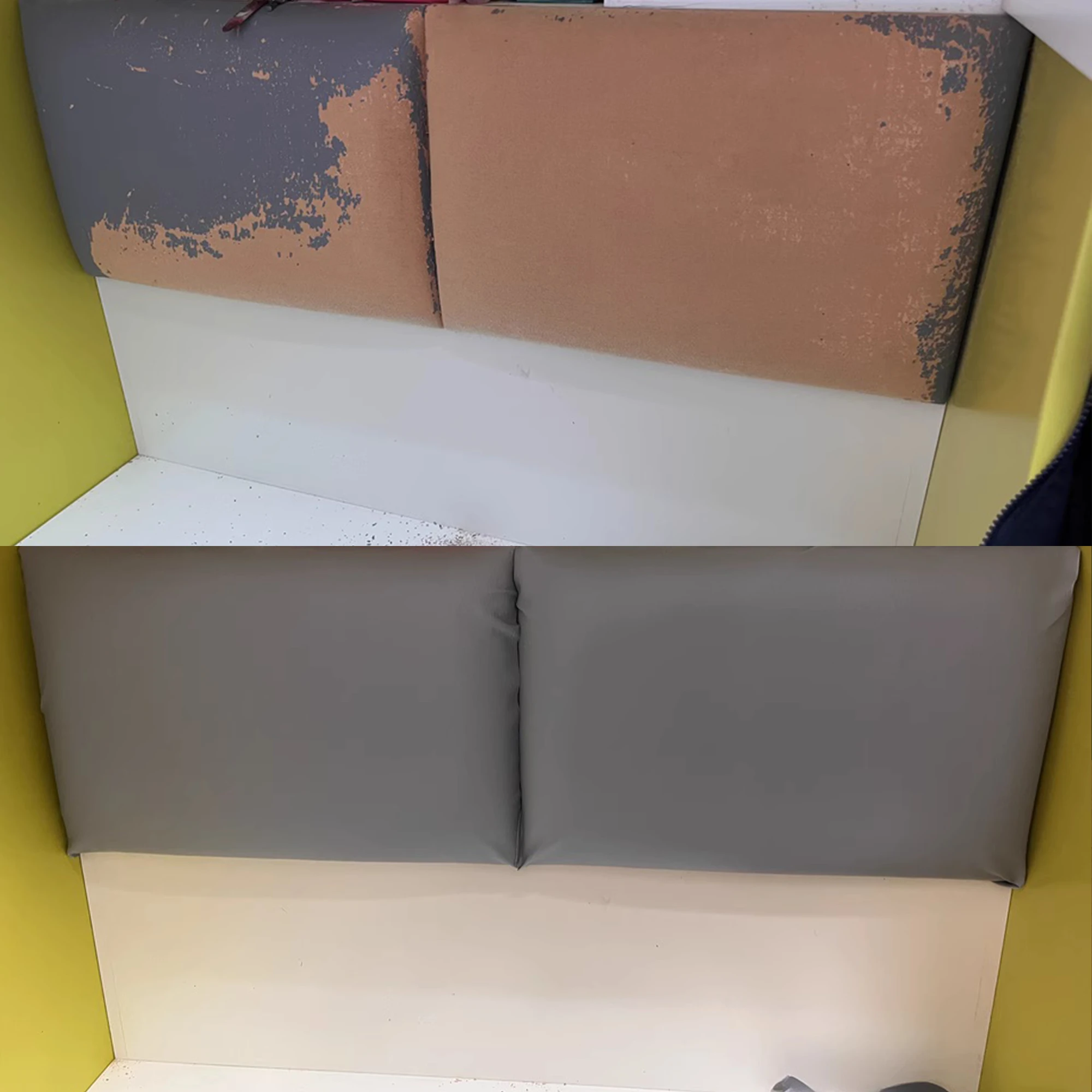
The Essential Mitcer Toolkit for Success
To achieve a result that lasts years rather than days, you need more than just a basic kit. I’ve curated the Mitcer professional-grade lineup to ensure that every DIY leather repair project has the structural integrity of a factory finish. Using low-end retail fillers often leads to cracking, but our wholesale-quality supplies are designed for high-traffic endurance.
The Professional’s Checklist
Having the right chemistry on your workbench is the difference between a patch and a restoration. Here is what I consider non-negotiable for my toolkit:
- Premium Repair Gel: A high-solids leather filler compound that maintains flexibility and resists shrinking as it cures.
- Concentrated Pigments: Professional-grade colorants that allow for a precise color matching palette to blend with any hide.
- Cross-linker Additives: The \”secret sauce\” that creates a chemical bond between the new finish and the original surface for maximum durability.
- Application Tools: High-quality palette knives and stipple sponges for mastering the palette knife technique and texture replication.
Why Quality Supplies Matter
The durability of your work depends entirely on the bond. My professional-grade supplies—the same ones we provide to our wholesale partners—contain higher concentrations of resins and UV-resistant binders. To handle the physical side of the repair, utilizing a comprehensive 23-set Micter leather tools kit provides the precision scrapers and specialized needles required for structural reinforcement.
By choosing professional leather craft tools, you avoid the common pitfalls of \”peeling\” that plague generic store-bought kits. Investing in the right components from the start ensures your repair remains invisible and intact through daily use and seasonal temperature shifts.
3 Fatal Mistakes to Avoid in DIY Leather Repair
Even with the best tools, a few simple errors can ruin a restoration. I’ve seen these three mistakes ruin more projects than anything else. Avoid them to ensure your work lasts for years, not days.
1. Using a Hair Dryer Too Close (The \”Scorch\” Risk)
Heat is great for accelerating the curing process, but too much is a disaster. Holding a hair dryer or heat gun directly against the surface can scorch the surrounding hide or cause the leather filler compounds to bubble and become brittle.
- The Pro Rule: Keep your heat source at least 6-8 inches away.
- The Motion: Constantly move the dryer; never let it sit on one spot for more than a couple of seconds.
2. Ignoring the \”Flex Test\” Before the Seal
Leather is a skin—it moves, stretches, and breathes. If you apply a topcoat before checking the flexibility of your repair, you’re asking for trouble.
- The Test: Once the filler is dry, gently press and flex the area.
- The Goal: Ensure the bond is elastic. If it feels stiff or starts to lift at the edges, you need to sand and re-apply a thinner layer. This step is non-negotiable when you repair a tear in a leather car seat or any high-traffic furniture.
3. Skipping the Post-Repair Conditioning
The cleaning and degreasing process effectively strips the leather of its natural oils. If you finish the job and walk away, the area around the repair will eventually become dry and crack.
- The Fix: Wait 24–48 hours for the repair to fully cure, then apply a premium leather conditioner.
- The Result: This restores the \”hand\” (feel) of the leather and ensures the repair blends seamlessly with the rest of the piece. Using a complete leather working tools kit ensures you have the right applicators to finish the job without leaving streaks.
DIY Leather Restoration FAQs
Can I fix peeling leather with a DIY kit?
Yes, you can. Peeling usually happens when the synthetic coating on bonded leather begins to delaminate. To fix it, you need to remove the loose flakes and apply a high-quality binder to stabilize the surface. I’ve found that you can successfully repair a peeling leather couch by using a peeling leather repair method that involves leveling the area with a flexible filler before applying a new color coat.
How do I know if I have aniline leather?
The easiest way is the \”absorbent test.\” Put a tiny drop of water on a hidden area; if it soaks in and darkens the spot, you have aniline. Because this leather lacks a heavy protective pigment, it requires specialized aniline leather care products that won\’t clog the natural pores of the hide.
How long should I wait before sitting on a repaired sofa?
Don\’t rush the process. Even if the surface feels dry, the leather filler compounds and pigments need time to stabilize. I recommend waiting 24 to 48 hours for a full cure. This ensures the repair can handle the tension and \”flex\” of daily use without peeling or cracking.
What is the best way to handle scuff restoration?
For minor damage on high-use items, using a professional leather handbag repair kit makes the job seamless. My preferred process for scuff restoration includes:
- Clean: Use a surface degreasing agent to remove oils.
- Prep: Lightly sand any rough fibers for a smooth base.
- Color: Apply a matching pigment using a microfiber application sponge to blend the edges.
- Seal: Finish with a UV-resistant topcoat to protect the new finish from fading.