
Assess the Damage: Can You DIY Leather Seat Repair?
First things first: take a breath. Seeing a rip in your upholstery is frustrating, but not every tear requires an expensive trip to the upholstery shop. I have saved hundreds of dollars simply by knowing when to tackle a repair torn leather car seat job myself versus calling in the cavalry.
Before you buy supplies, let’s categorize the damage to see if you are in the \”Green Zone\” for a DIY fix.
Sizing Up the Tear
- Small Tears (Under 2 inches): This is the sweet spot. If you have a straight cut, a cigarette burn, or a small snag, you are the perfect candidate for a DIY leather seat repair. These are easily fixed with patches or fillers.
- Medium Tears: If the rip is slightly larger but the leather is still pliable and the edges can be brought together, a patch is often the best route for quick coverage.
- Large or Complex Tears: If the damage is along a seam (stitching failure) or on a high-stress bolster where the foam is crumbling out, structural integrity is compromised. You might need professional help here.
Quick Assessment Checklist
Ask yourself these three questions before starting:
- Are the edges clean? Clean cuts are easier to bond than jagged, missing chunks of leather.
- Is the foam visible? If the yellow foam is exposed but intact, you can cover it. If the foam is missing, you need to replace that volume first.
- Is it a high-wear area? Driver\’s side bolsters take a beating. You need a heavy-duty solution like a Micter leather repair patch that withstands friction, rather than a delicate liquid filler.
Cost Breakdown: DIY vs. Professional
The motivation to do it yourself is usually in the wallet. Here is the reality of the costs:
| Repair Option | Estimated Cost | Time Required |
|---|---|---|
| DIY Solution (Patch/Kit) | $15 – $50 | 15–30 Mins |
| Professional Upholstery | $150 – $500+ | 2–5 Days |
If your tear falls into the small-to-medium category, spending $20 on a high-quality patch is a no-brainer compared to the dealership markup.
Best Repair Methods Compared
When you need to repair a torn leather car seat, you generally have three main routes. Choosing the right one depends on how much time you have and your comfort level with DIY projects. Here is a breakdown of the most common methods to help you decide.
Method 1: Self-Adhesive Leather Patch
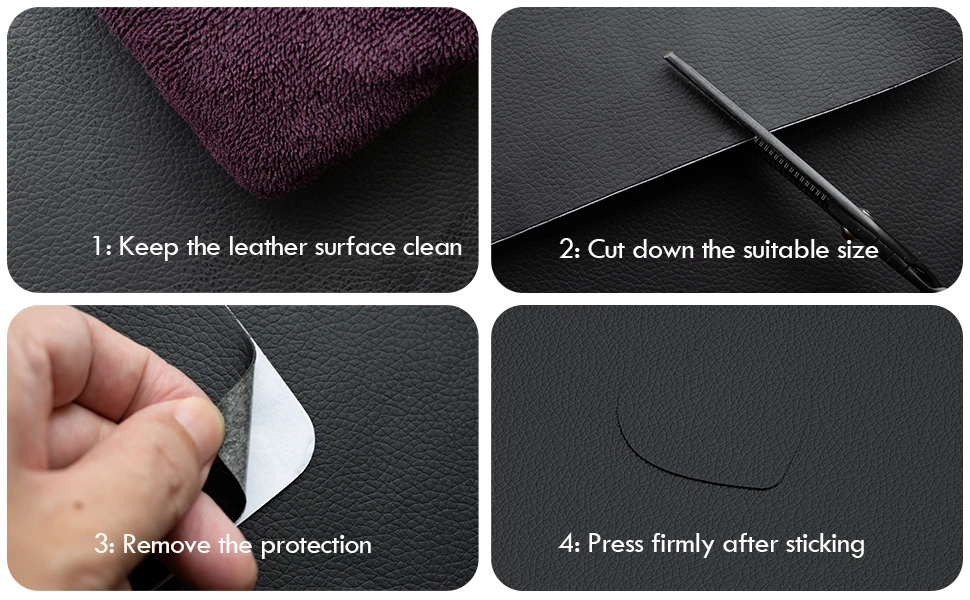
This is hands down the fastest and most beginner-friendly way to fix a rip in a leather car seat. It skips the messy glues, color mixing, and heat tools. You simply cut the material to size, peel off the backing, and stick it down. If you want a durable solution that looks professional without the hassle, using high-quality self-adhesive leather patches is usually the smartest move for immediate results.
- Best for: Cuts, rips, and covering ugly scratches quickly.
- Pros: Zero drying time, strong adhesion, and durable waterproof finish.
Method 2: Filler + Sub-Patch + Colorant
This is the traditional \”restoration\” route. It involves inserting a backing cloth behind the tear, applying a leather filler for car seats, sanding it smooth, and then painting it to match. While this method can create a seamless look, it requires a steady hand and patience.
- Best for: Perfectionists willing to spend hours on the process.
- Cons: Long drying times and difficult color matching.
Method 3: Sewing or Backing
For very small splits, some people try to sew the edges back together. However, on older car seats, the leather is often too dry or brittle, and the needle can create new perforations that eventually tear again.
Why Patches Often Win
For most drivers, a patch for a torn leather seat is the clear winner. I prefer this method because there are no drying time hassles or chemical smells. Modern patches feature realistic leather grain textures that blend surprisingly well with your interior, providing a sturdy fix that stops the damage from spreading instantly.
Key Advantages of Patches:
- Instant Fix: No waiting 24 hours for glue to cure.
- Mess-Free: No sanding dust or spilled dyes.
- Durability: Engineered to withstand the friction of getting in and out of the car.
Would you like me to guide you through the specific steps of applying a Micter patch for a flawless finish?
Recommended Solution: Micter Leather Repair Patch
When you need to repair a torn leather car seat quickly and effectively, I believe you shouldn\’t have to become a chemistry expert. For most drivers, the best leather repair kit for cars isn\’t a complex liquid kit—it\’s a high-quality, self-adhesive leather patch.
I recommend the Micter solution because it focuses on a \”cut and press\” application. There is no waiting for glue to dry, no sanding, and no mixing paints. We designed this to be the most beginner-friendly way to fix a leather tear on a driver seat. As we like to say, \”A simple patch and the leather is as good as new.\”
Why Micter is the Superior Choice
Unlike generic tapes that peel off in the summer heat, our patches are engineered specifically for the automotive environment. The grain patterns are realistic, helping the patch blend seamlessly into your existing upholstery. It’s similar to the durability required when you repair leather furniture, but optimized for the high traffic of a vehicle.
Key Benefits at a Glance
| Feature | Why It Matters for Your Car |
|---|---|
| Simple Application | Just peel and stick. No mess, tools, or drying time required. |
| Durable Adhesive | Built to withstand high interior heat and sun exposure without peeling. |
| Realistic Texture | Mimics natural leather grain for an invisible finish. |
| Flexible Material | Moves with the seat foam so it won\’t crack under pressure. |
We offer a wide overview of shades—from standard blacks and greys to beiges—and various sizes to ensure you can cover everything from a cigarette burn to a long rip. It is the most reliable method to extend the life of your interior.
Step-by-Step Guide: How to Repair a Tear in a Leather Car Seat
Fixing a ripped seat doesn\’t have to be a headache. I’ve designed our method so that a simple patch and the leather is as good as new. If you are ready to repair a torn leather car seat yourself, follow this straightforward process to get professional-looking results without the shop price tag.
1. Gather Your Supplies
You don\’t need heavy machinery. To fix a rip in a leather car seat, you just need:
- Your Micter leather repair patch.
- Sharp scissors.
- Rubbing alcohol or a dedicated leather cleaner.
- A soft, lint-free cloth.
If you need precision tools for trimming jagged leather edges, our 11 set Micter leather craft tools kit contains everything you need to prep the area cleanly.
2. Clean the Area Thoroughly
Adhesive hates grease. Use alcohol or a cleaner to wipe down the area around the leather car seat tear. Remove all dirt, body oils, and silicone dashboard sprays. Let it dry completely. If it\’s damp, the self-adhesive leather patch won\’t stick properly.
3. Trim Ragged Edges
If the tear has fuzzy edges or loose threads sticking out, snip them off. You want a flat surface so the patch lays smooth. This is crucial for a clean, effective DIY leather seat repair.
4. Cut the Patch to Size
Measure your damage. Cut your patch so that it overlaps the tear by at least 1 inch (2.5 cm) on all sides. I always recommend rounding the corners of the patch with your scissors; sharp corners catch on clothing and peel up easier than rounded ones.
5. Peel and Press
Peel off the backing paper. Center the patch over the hole and press it down firmly. Start from the center and smooth it outwards to push out air bubbles. Rub the edges vigorously to generate a little heat and maximize adhesion.
6. Let It Cure
While our patches stick immediately, patience pays off. Allow the patch to cure for 24 hours before sitting on it or exposing it to heavy friction.
Pro Tip: For the best leather car seat tear repair, apply the patch in warm conditions. If it\’s freezing outside, warm the seat slightly with a hair dryer (carefully!) before applying to help the adhesive bite into the leather grain.
Alternative Method: Using a Traditional Filler Kit (for Deeper Tears)
If you are dealing with a gouge, a cigarette burn, or a deep hole where the leather material is actually missing, a surface patch might not sit flush. in these specific cases, using a leather filler for car seats is the professional approach to rebuild the surface from the inside out. This method takes more time and patience than a \”peel and stick\” solution, but it is necessary when you need to level out a depression in the seat.
Essential Materials List:
- Sub-patch backing cloth (canvas or linen)
- Leather adhesive
- Heavy filler compound (paste)
- Spatula or palette knife (often included in a standard leather working tools kit)
- Sandpaper (fine grit, usually 320–500)
- Leather colorant and sponge applicator
- Clear top-coat sealant
Step-by-Step Filler Application
- Insert the Backing: Cut your sub-patch material slightly larger than the hole. Using tweezers, carefully slide it inside the tear so it rests flat against the seat foam.
- Glue the Foundation: Apply a small amount of leather glue between the underside of the original leather and your new sub-patch. Press down to bond them securely. This creates a stable floor so the filler doesn\’t sink.
- Layer the Filler: Spread the filler paste into the void. Do not try to fill it all at once. Apply thin layers, allowing each one to dry (use a hairdryer to speed this up). Repeat until the filler is just slightly above the surface level.
- Sand Smooth: Once fully cured, gently sand the filler down until it is perfectly flush with the surrounding leather.
- Color and Seal: Sponge on your colorant to hide the white or grey filler. Color matching leather repair is an art—apply light coats and fade them out into the surrounding area to blend it. Finish with a sealant to lock it in.
When to Choose Filler Over a Patch
You should opt for this method if you are looking to fix a hole in a leather car seat where texture reconstruction is key. It allows you to fill gaps and sand them smooth for a seamless look. However, be aware that filler lacks the structural flexibility of a patch; in high-stress areas (like where you sit), filler can sometimes crack over time if applied too thickly. For standard rips where the edges still meet, a patch is often more durable.
Tips for Perfect Color Matching & Invisible Results
Getting the aesthetics right is the difference between a seamless restoration and an obvious patch job. When you learn how to repair a tear in a leather car seat, patience with color and texture ensures the damage virtually disappears.
Trust Natural Light
Never attempt color matching leather repair inside a dim garage or under artificial yellow lighting. These conditions distort colors. always move the vehicle into direct sunlight or strong natural daylight. This allows you to see the true undertones of your upholstery—whether your \”black\” leather actually has blue or brown hints—ensuring you pick the right shade.
Test and Blend
Before committing to the final fix, verify your match:
- Swatches: If using a patch, hold it against different sections of the seat.
- Hidden Spots: If applying dye or filler, test a tiny amount on a hidden area (like the underside of the seat) to see how it dries.
- Feathering: When applying colorants, blend the edges outward to avoid hard lines.
Recreating Texture
A flat, smooth repair stands out on textured automotive leather.
- For Patches: Our Micter patches feature a realistic grain pattern stamped into the material, designed to naturally mimic standard car leather textures.
- For Fillers: If you opt for liquid fillers, you must manually add texture before it dries. Using a modeling tool from a 16-set professional leather craft tools kit allows you to gently stipple or press grain patterns into the filler, helping it match the surrounding hide.
What to Expect
With a DIY leather seat repair, the goal is a durable, clean look. Micter patches are engineered to blend seamlessly with the most common car interior colors. While complex custom dye jobs take hours, our solution offers a realistic finish in minutes. A simple patch and the leather is as good as new.
How to Prevent Future Tears & Maintain Leather Seats
After you figure out how to repair a tear in your leather car seat, the last thing you want is to do it all over again. Prevention is always cheaper and easier than a full restoration. To stop damage before it starts and prevent leather seat tear spreading, follow these simple habits:
- Condition Often: Leather is skin; it needs moisture. Apply a quality conditioner every 3–6 months to stop the material from drying out and becoming brittle.
- Watch for Sharp Hazards: Keys, heavy tools, or metal zippers in back pockets are often the culprits that cause the initial snag.
- Limit Sun Exposure: UV rays accelerate aging and fading. Park in the shade or use a sunshade to protect your interior.
- Act Fast on Small Cracks: If you notice minor scuffs or color fading, fix them immediately. Keeping a set of leather dye marker pens handy allows for quick touch-ups before a small scratch turns into a massive hole.
- Use Seat Covers: In high-traffic vehicles or if you travel with pets, a physical barrier is your best bet against friction and claws.
Regular care ensures you won\’t need to repair cracked leather car seat damage nearly as often. A little attention goes a long way in keeping your ride looking premium.
When to Call a Professional for Leather Repair
I love a good DIY fix, but sometimes knowing how to repair tear in leather car seat means knowing when to hand the keys to an expert. While adhesive patches work wonders for most cosmetic damage, certain situations require the tools and skills of an upholstery shop.
Signs It’s Beyond DIY
If you encounter these issues, professional vs DIY leather repair leans heavily toward the pro:
- Seam Separation: If the stitching itself has popped or unraveled, a patch won\’t hold the structural tension needed when you sit down.
- Perforated or Heated Seats: Replicating the tiny ventilation holes in perforated leather is nearly impossible with a standard kit without blocking airflow or looking messy.
- Deep Foam Damage: If the yellow cushion foam is crumbling or missing, the seat needs structural rebuilding before the leather can be fixed.
- Airbag Seams: Never patch over the specialized stitching designed for side airbags. This is a critical safety hazard; let a certified pro handle it.
Average Pro Costs and Expectations
If you decide the damage is too severe for a quick patch, be prepared for the price tag.
- The Cost: Professional repairs typically range from $150 to $500+ per panel, depending on the car model and damage extent.
- The Process: Unlike a 5-minute patch job, you may be without your vehicle for a day or two while fillers cure and custom dyes are color-matched.
Bottom line: If the tear is small, cosmetic, and on a flat surface, save your money and use a high-quality patch. If the seat is structurally failing or the tear is on a safety seam, invest in professional help.