Step 1: Identify Your Leather Type (Don’t Skip This!)
Before we grab the leather couch tear repair kit, we have to know exactly what we are working with. Treating real hide the same way you treat a synthetic blend is the fastest way to ruin a sofa. I’ve seen countless DIY jobs fail simply because the homeowner didn\’t take thirty seconds to identify the material.
Real Leather vs. Bonded vs. Faux
- Top-Grain & Full-Grain Leather: This is the \”real deal.\” It’s durable, breathable, and develops a beautiful patina over time. It responds best to high-quality leather couch restoration techniques.
- Faux Leather (PU/Vinyl): A completely synthetic plastic coating. It doesn\’t breathe or absorb oils, so surface patches are usually your best bet here.
- Bonded Leather: This is the trickiest of the bunch. It’s actually shredded leather scraps glued to a backing. When you see a peeling leather couch, it is almost always bonded leather.
The 30-Second Water-Drop Test
To choose the right diy leather couch repair method, perform this simple test on a hidden area:
- Aniline (Unprotected): Water absorbs instantly, leaving a dark spot. This leather is porous and requires specialized care.
- Semi-Aniline: Water sits for a moment before slowly soaking in. It has a light protective coating.
- Pigmented (Protected): Water beads up and stays on the surface. This is the most common type for furniture because it\’s easy to repair leather furniture of this grade.
Why Bonded Leather Peeling is Different
I’ll be honest with you: if your bonded leather is flaking off in large sheets, it’s a structural failure of the glue, not a simple scratch. While a standard leather sofa color restoration won\’t stop the peeling, using a high-quality leather patch for couch repairs can bridge the gap and extend the life of your furniture for years. Identifying this early saves you from wasting money on liquid fillers that won\’t hold.
Assess the Damage: Can You Repair Your Leather Couch at Home?
Before grabbing your tools, you need to determine if the damage is a quick DIY fix or a job for a professional upholsterer. Most common wear and tear issues are easily handled with the right leather couch tear repair kit, but size and depth are the deciding factors.
Identifying Scratches and Cat Marks
- Surface Scratches: These are light marks that haven\’t broken through the leather surface. They usually disappear with a quick buffing.
- Deep Cat Claws: If you need to cat scratched leather couch repair, check for frayed fibers. These require a bit of sanding and filler to smooth out the texture before recoloring.
Sizing Up Rips and Tears
I generally recommend the \”3-inch rule.\” If you want to fix a torn leather couch and the opening is under 3 inches, a DIY sub-patch or adhesive patch will hold up beautifully. Large, structural rips across seating cushions often require professional stitching to handle the weight of someone sitting down.
Cracks vs. Cigarette Burns
- Dryness Cracks: These look like spiderwebs and are caused by a lack of moisture. It is much easier to repair cracked leather when you catch it early before the leather splits into a full hole.
- Cigarette Burns: These are localized but destructive. You’ll need to trim away the charred edges before applying any filler or patch to ensure the repair stays permanent.
Faded Areas and Discoloration
Fading on headrests and armrests is usually caused by body oils or sunlight. This is a prime candidate for leather furniture repair at home. If the leather is still structurally sound but looks \”tired,\” a simple color restoration can make the entire piece look brand new again.
Best Leather Repair Kit 2026: Essential Tools for Your Couch
To repair leather couch damage effectively, you need a setup that balances ease of use with professional durability. I always emphasize that the prep work is just as vital as the repair itself. Before you start, ensure you have these \”must-have\” items ready:
- Cleaning Alcohol: Essential for removing dirt and oils so the adhesive bonds permanently.
- Sub-patches: Used behind the leather for structural support on deep rips or large holes.
- Leather Glue: Helpful for securing frayed edges before applying a top layer.
Why Micter Patches Beat Messy Fillers
Most traditional kits rely on liquid fillers and heat-set dyes, which are notoriously difficult for beginners to master. I’ve refined the Micter solution to bypass that headache entirely. Using a self-adhesive leather patch offers a clean, peel-and-stick application that looks far more natural than a botched filler job.
Comparison: Patch vs. Liquid Kits
| Repair Feature | Micter Leather Patch | Traditional Dye/Filler Kits |
|---|---|---|
| Application Time | Under 5 Minutes | 24+ Hours (Curing required) |
| Texture Match | Embossed Realistic Grain | Difficult to Texture |
| Skill Level | Beginner Friendly | Professional/Advanced |
| Cleanliness | No Mess | High Risk of Stains |
If you are looking for the best leather repair kit 2026, our self-adhesive leather patches 4pcs pack is the gold standard for value and coverage. Choosing a high-quality leather patch for couch restoration ensures that your repair stays flexible and doesn\’t peel away after a few weeks of use. Our ultra-thin materials provide a flush finish that blends into your furniture, making the repair nearly invisible to the naked eye.
How to Repair Leather Couch Damage: DIY Fixes for Every Problem
I’ve found that most people panic when they see a scratch, but you don\’t always need a professional. When you repair leather couch surfaces, the method depends entirely on the depth of the damage. Here is how I handle the most common issues.
Surface Scratches and Scuffs (5-Minute Fix)
For light fingernail marks or minor scuffs, you don\’t need heavy chemicals.
- The Method: Apply a small amount of leather conditioner or a dedicated recoloring balm to a soft cloth.
- The Action: Rub in a circular motion. The heat from the friction helps the leather fibers absorb the oils and redistribute the pigment, making the scuff disappear almost instantly.
Cat Scratched Leather Couch Repair
Cat claws create \”burrs\” or fuzzy textures. To fix this:
- Trim: Use small scissors to snip off any protruding fibers.
- Smooth: Lightly sand the area with 1200-grit sandpaper.
- Fill: Use a tiny amount of leather filler if the gouge is deep, then dab on a matching colorant.
Fixing Rips with the Sub-Patch Technique
If you need to fix torn leather couch cushions, a sub-patch is the only way to ensure the repair lasts.
- Insert: Push a fabric sub-patch through the hole so it sits flat behind the leather.
- Glue: Apply leather adhesive between the sub-patch and the underside of the leather.
- Seal: Press the edges together firmly. This creates a structural bond that prevents the tear from widening.
Bonded Leather Peeling Fix
Bonded leather doesn\’t just scratch; it delaminates. Because the \”skin\” is so thin, fillers rarely work.
- The Realistic Fix: Gently peel away any loose flakes.
- The Solution: Cover the entire section with a high-quality leather patch for couch restoration. This provides a clean, uniform surface and stops the peeling from spreading to the rest of the seat.
Worn Leather Couch Restoration for Faded Areas
Headrests and armrests often lose color due to body oils and sun exposure.
- Clean: Use a leather cleaner to remove built-up oils.
- Restore: Apply a leather pigment or dye specifically matched to your sofa.
- Protect: Always finish with a top coat or protector to lock the color in and prevent future fading.
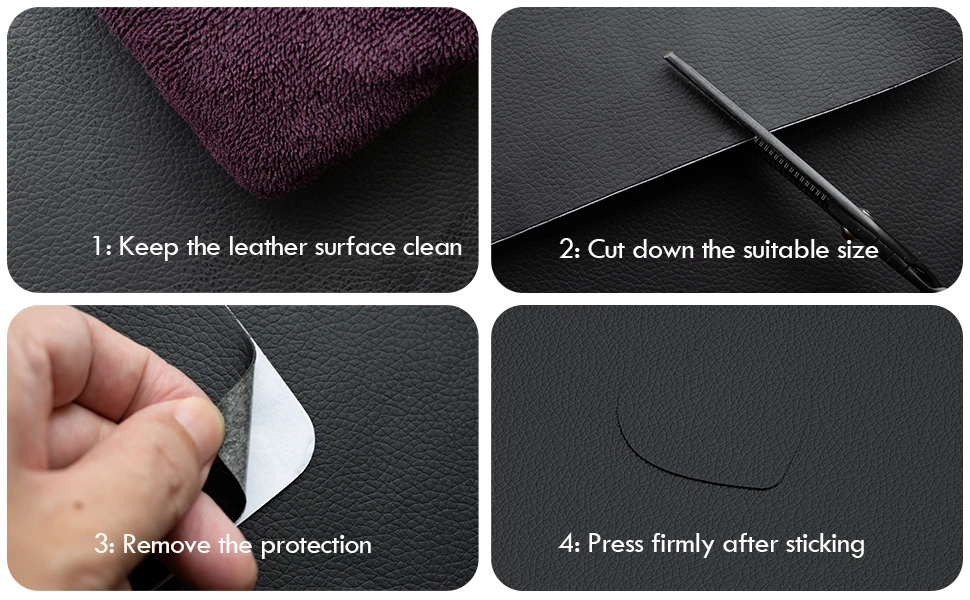
Step 5: Step-by-Step Application with Micter Patches
Applying our Micter patches is the quickest way to achieve an invisible leather couch repair without the mess of liquid glues. I have designed this process to be foolproof, ensuring your diy leather couch repair looks professional and stays durable.
1. Surface Preparation
Cleaning is the foundation of a permanent bond. Use a microfiber cloth and a small amount of rubbing alcohol to wipe down the damaged area. This removes body oils, dust, and old wax that could prevent the adhesive from sticking. Let the area dry completely before proceeding.
2. Cutting for a Seamless Look
Measure the area and cut the patch to size. For the best results when you repair leather couch cushions or arms, always round the corners of the patch. Sharp corners are prone to peeling, whereas rounded edges blend into the natural lines of the furniture. Our self-adhesive leather patches are designed to be thin enough to lay flat against the surface.
3. Applying the Leather Patch for Couch Repairs
Peel the backing carefully and align one edge of the patch. Press down firmly, smoothing it out toward the other side to eliminate any air bubbles. If you are using our multi-piece leather repair kits, you can overlap them slightly for larger rips, though a single large patch is usually best for a clean finish.
4. Texture Blending and Curing
- Bonding: Apply firm pressure for 60 seconds. The heat from your hands helps activate the adhesive.
- Texture: If the patch feels too \”new,\” you can gently buff the edges with a soft cloth to help it blend with the surrounding grain.
- Cure Time: Avoid sitting on the repaired area for at least 24 hours. This allows the adhesive to reach its maximum strength.
- Heat (Optional): A quick pass with a hairdryer on a low, warm setting can help the patch \”melt\” into the texture of the original leather for a more natural look.
Following these steps ensures that repairing a worn leather couch is a one-time job that restores the beauty and function of your furniture instantly.
DIY vs. Professional: How to Best Repair Leather Couch Damage
Deciding whether to repair leather couch issues yourself or hire a service comes down to the severity of the damage and your budget. For most surface-level issues, a diy leather couch repair is the most cost-effective path that yields high-quality results.
Cost Comparison: DIY vs. Professional
| Service Level | DIY Budget | Professional Price |
|---|---|---|
| Surface Scratches | $20 – $35 | $150 – $200 |
| Small Tears (<3\”) | $30 – $50 | $200 – $300 |
| Full Color Restore | $45 – $70 | $350 – $500+ |
Damage Severity Decision Matrix
Knowing when to look for leather furniture repair near me versus handling it at home saves you both time and money.
- Handle it DIY if: You are dealing with a cat scratched leather couch repair, minor worn leather couch restoration, or a small invisible leather couch repair using a sub patch leather repair method.
- Call a Professional if: The leather is ripped across a structural seam, the internal frame is broken, or you have a widespread bonded leather peeling fix that requires full panel replacement.
Longevity and Durability Expectations
A home fix using the best leather repair kit 2026 standards can last for several years with proper care. For instance, applying a leather repair gel effectively seals cracks and prevents further spreading. For more involved projects, utilizing a set of professional leather craft tools provides the precision needed for a factory-finish result. While a pro offers a service guarantee, a well-executed leather patch for couch provides a durable, near-permanent solution for a fraction of the cost.
Prevention: Make Your Repair Leather Couch Job Last Forever
Once you’ve finished a diy leather couch repair, the goal shifts to long-term durability. Whether you used a leather patch for couch spots or performed a full worn leather couch restoration, consistent maintenance is the only way to prevent new damage. I recommend a proactive approach to keep the material supple and the finish intact.
Conditioners to Prevent a Cracked Leather Couch
- Pigmented Leather: Apply a pH-neutral conditioner every six months to keep the surface flexible and prevent the topcoat from becoming brittle.
- Aniline Leather: Use specialized breathable creams to avoid darkening the hide while preventing it from becoming a dry, cracked leather couch.
- Bonded Leather: While fragile, water-based protectants can help slow down the inevitable bonded leather peeling by maintaining surface tension.
Habits to Maintain Leather Sofa Color Restoration
- UV Protection: Keep your furniture away from direct windows. Sunlight is the primary cause of a faded leather couch, breaking down dyes over time.
- Spill Management: Blot liquids immediately with a dry microfiber cloth. Keeping a professional leather sofa repair kit on hand allows you to touch up any finish that lifts during accidental deep cleaning.
- Ink Prevention: Avoid leaving pens or newspapers on cushions; ink transfer is notoriously difficult to remove without ruining an invisible leather couch repair.
Proactive Pet-Proofing for High-Wear Zones
To avoid the need for another cat scratched leather couch repair, keep pet claws trimmed and consider using heavy-duty throws over the armrests and headrests. These are the most common \”high-wear\” zones where body oils and claws do the most damage. Using a sub patch leather repair technique on internal structures can also reinforce areas that your pets frequent, ensuring your best leather repair kit 2026 results remain permanent.