
Are you staring at fresh claw marks on your favorite sofa?
You might be searching for how to repair cat scratch on leather with olive oil as a quick, budget-friendly fix.
But is it actually safe, or will it ruin your furniture?
Well, you\’re in the right place because I\’m going to give you the honest truth about this popular DIY hack.
In this guide, you\’re going to learn exactly how to use this common household item effectively for minor scuffs.
I\’ll cover the proven application steps, the critical risks you must avoid, and the best professional-grade alternatives for deep damage.
Let\’s dive right in.
Understanding Cat Scratches on Leather
We know the feeling—you’ve invested in a beautiful, luxurious leather sofa, and then you spot them: cat claw marks on the sofa. While leather is \”tough as nails\” and built to last, it isn\’t invincible against our furry friends. Before grabbing the olive oil, I always recommend taking a moment to understand exactly what kind of damage we are dealing with. Not all leather furniture pet damage is the same, and identifying the severity is the first step to a successful DIY fix.
Assessing Scratch Severity
According to our repair guidelines, scratches generally fall into three distinct categories. Knowing the difference saves you from using the wrong treatment on your furniture.
- Light Scuffs: These are minor surface marks that haven\’t penetrated the leather\’s skin. They often look like slight discoloration and are the easiest to hide.
- Medium Indents: This is where DIY leather scratch repair gets interesting. These scratches are visible cuts that you can feel with your finger, but they haven\’t gone all the way through the hide. This is the \”sweet spot\” for remedies like olive oil and vinegar.
- Deep Gouges: These are serious tears where the leather is cut completely through, potentially exposing the backing or stuffing. You will often see loose fibers sticking out. These usually require a leather filler or professional help rather than just a simple oil treatment.
Why Scratches Appear White or Fuzzy
You might notice that cat claw marks often look lighter than the surrounding leather or have a fuzzy texture. This usually happens for two reasons:
- Displaced Fibers: When a claw drags across the surface, it pulls up the microscopic fibers of the hide, creating a rough, light-reflecting texture.
- Dryness: If your leather has become \”dry and brittle\” due to a lack of conditioning, it is much more prone to showing these marks. Keeping leather \”soft and supple\” is key to preventing the fibers from breaking and turning white in the first place.
Is Olive Oil Safe and Effective for Leather?
When figuring out how to repair cat scratch on leather with olive oil, it is important to understand that this is a \”home remedy\” designed for blending rather than structural repair. Olive oil works by penetrating the exposed fibers of a scratch, darkening them to match the surrounding finished leather. It essentially acts as a moisturizer that reduces the visibility of the friction mark, making it a viable option for those medium scratches that vinegar alone cannot hide.
The Pros and Cons of Using Olive Oil:
- Cost-Effective: It is an accessible solution found in most kitchens, saving you from buying expensive specialized balms for minor cosmetic issues.
- Effective Blending: It provides \”extra blending\” power for scratches that are visible but haven\’t torn through the leather\’s backing.
- Risk of Discoloration: The main drawback is the potential for uneven darkening. If applied too liberally, it can create a dark spot that looks worse than the scratch itself.
Expert Consensus: When to Use It
We recommend using olive oil specifically for medium-depth scratches where the goal is to camouflage the white or fuzzy fibers. It is not suitable for deep cuts or tears; for those, you would need professional fillers or leather working tools to physically repair the damage. Always follow the golden rule of leather maintenance: test the oil on an inconspicuous area first. If the leather absorbs it evenly without adverse reactions, you can proceed to use it as a natural oil for leather restoration on the damaged area.
Step-by-Step: Repairing Cat Scratches with Olive Oil
When you are dealing with those frustrating medium-depth marks that you can feel with your fingertips, a simple DIY leather scratch repair routine using household items can often save the day. While leather is tough as nails, it needs the right approach to hide imperfections without causing further damage. Before you start, gather your necessary materials: a soft cloth, mild soap, distilled white vinegar, colorless shoe polish, and standard olive oil.
Preparation and Spot Testing
Success lies in the prep work. First, clean the affected area using a soft damp cloth and mild soap to remove any dirt or oils, then dry it completely. Before applying any olive oil leather conditioner or treatment to the main scratch, always test a small amount on an inconspicuous area of the furniture. This ensures the oil won\’t darken the leather unevenly or cause an adverse reaction.
Application Guide
For the best results on medium scratches, follow this specific layering method:
- Swell the Fibers: Dab a little distilled white vinegar on the scratch and let it dry. This helps swell the collagen fibers in the leather.
- Initial Polish: Apply a layer of colorless shoe polish to begin blending the mark.
- The Olive Oil Fix: If the scratch remains visible, rub a small amount of olive oil directly onto the area. This step provides extra blending power for minor leather scuffs home remedy efforts, helping the scratch fade into the surrounding texture.
- Final Buff: Finish by applying another coat of shoe polish to seal the repair and restore the natural sheen.
Post-Repair Care
Once the scratch is blended, maintain the area by keeping the leather soft and supple. Regular conditioning prevents the material from becoming dry and brittle, which makes it more susceptible to future damage. If you find the damage is widespread or deeper than expected, reviewing a complete guide on how to repair cat scratch on leather sofa can help you tackle more severe restoration projects.
Alternative Home Remedies for Light Scratches
If you aren\’t ready to commit to a full repair kit yet, simple household items can often handle a minor leather scuffs home remedy. Before reaching for the olive oil, it is worth trying a few other pantry staples that professional furniture makers often suggest for surface-level marks.
Using Distilled White Vinegar
Distilled white vinegar is surprisingly effective for leather furniture pet damage. It works by causing the collagen fibers in the leather to swell.
- Application: Dab a small amount of vinegar onto the scratch using a cotton swab or soft cloth.
- Effect: As it dries, the swollen fibers fill the gap created by the scratch, making the indent less visible.
Applying Colorless Shoe Polish
After the vinegar treatment, the area might look a bit dull. Colorless shoe polish is excellent for blending the repaired spot with the surrounding material. It restores the sheen without altering the color, helping to hide the visual evidence of the scratch.
Comparing Conditioners to Natural Oils
While a vinegar olive oil leather fix is a popular DIY route, there is a difference between kitchen oils and formulated products.
- Natural Oils (Olive Oil): Good for \”extra blending\” if vinegar and polish don\’t fully hide the mark. It adds moisture but can darken some leathers.
- Leather Conditioners: These are chemically balanced to maintain the leather\’s pH and prevent rot.
For consistent results, especially on high-value items, using a dedicated solution to repair leather couch scratch issues is often safer than relying solely on food-grade oils, which may turn rancid over time.
Fixing Deep Scratches: When DIY Isn\’t Enough
Olive oil is a fantastic home remedy for blending medium surface marks, but it has hard limits. If your cat has left a gouge that cuts completely through the leather to expose the backing, or if the edges are curling significantly, oil will not work. Applying liquids to these open wounds can actually saturate the padding underneath and prevent proper adhesion for future repairs.
Trimming and Prepping the Area
Deep scratches often leave the leather looking fuzzy and ragged. You cannot effectively repair a surface that isn\’t smooth.
- Clean the Spot: Use a mild soap or specialized leather cleaner to remove grime and old oils.
- Trim Loose Fibers: Take a pair of sharp scissors and carefully clip off any loose, shredded fibers sticking up from the scratch. This prevents the repair from looking lumpy.
Using Leather Fillers for Structural Repair
To fix a deep gouge, you need to restore the physical structure of the material. This requires a leather binder for tears or a filler compound rather than a simple liquid conditioner.
- Apply Filler: Use a small spatula to press a quality leather filler into the cut, filling the gap entirely.
- Dry and Sand: Allow the compound to dry fully, then lightly sand it down until it is flush with the surrounding surface.
- Color and Seal: Finish by applying a matching leather dye and a sealant to protect the repair and blend it with the rest of the couch.
For extensive damage where the material is ripped open, the process is similar to how you might repair a tear in a leather car seat, focusing on rebuilding structural integrity before worrying about aesthetics.
The Best Long-Term Fix: Leather Repair Patches
While olive oil and vinegar work wonders for surface-level scuffs, they have their limits. Liquid remedies often fail on deep damage because they cannot rebuild missing material or seal a physical tear. If your cat has gouged through the topcoat to the backing, adding oil might just darken the exposed fibers without hiding the gap.
For these severe cases, I recommend using self-adhesive leather patches to physically reinforce the area. Unlike liquid fillers that require mixing and curing, a patch provides an instant, uniform layer that halts further tearing. It is the most reliable way to patch leather sofa damage that has compromised the furniture\’s structure.
Why Choose Patches Over Liquid Fillers?
| Feature | Liquid Fillers/Oils | Self-Adhesive Patches |
|---|---|---|
| Application Time | Hours (drying required) | Seconds (peel and stick) |
| Structural Strength | Low (cosmetic only) | High (reinforces tears) |
| Mess Factor | High (mixing dyes) | Zero |
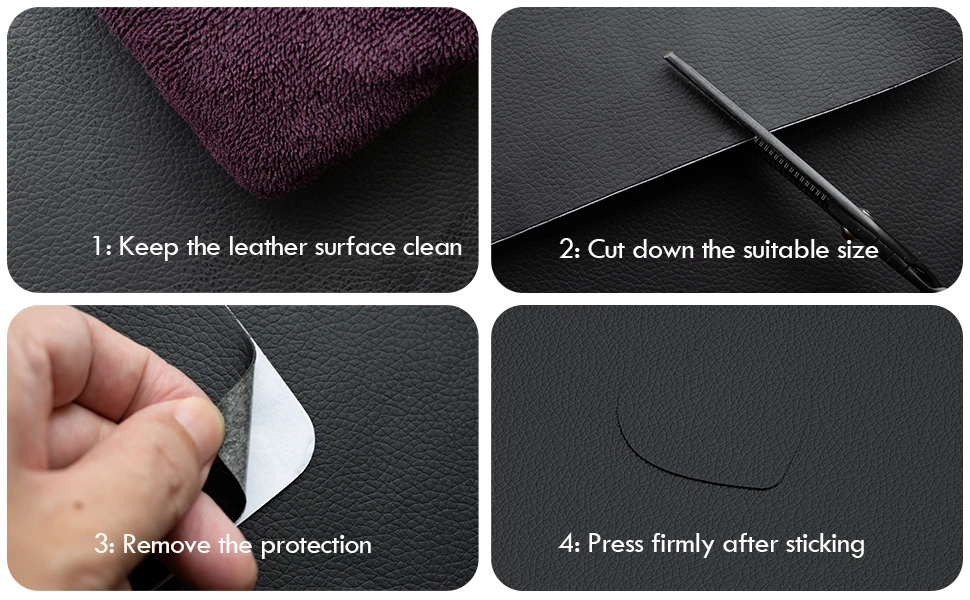
Quick Application Guide:
- Prep: Clean the area thoroughly to remove any olive oil residue or dirt.
- Cut: Trim your self-adhesive faux leather patch to size, rounding the corners to prevent peeling.
- Apply: Peel off the backing and press firmly over the damage for a seamless finish.
Preventing Future Cat Scratches on Furniture
While leather is famously \”tough as nails\” and durable, the best way to handle leather furniture pet damage is to stop it before it starts. Leather is a luxurious investment, and a few proactive steps can keep your sofa looking pristine despite your furry friends.
Redirecting the Scratch Instinct
Cats scratch naturally to mark territory and shed claw sheaths. Instead of fighting the instinct, redirect it:
- Scratching Posts: Place sturdy posts right next to the furniture your cat targets. Sisal or cardboard textures are usually more appealing than leather.
- Deterrents: Apply double-sided tape (cats hate the sticky feeling) or use citrus-scented sprays on the surrounding area to discourage them from getting too close.
Routine Maintenance and Care
According to expert care guides, the condition of the material matters just as much as the cat\’s behavior. Dry, brittle leather is far more prone to cracking and deep gouges than well-maintained hide.
- Condition Regularly: Keep the leather soft and supple by applying a quality conditioner. This ensures the surface remains resilient against minor friction.
- Trim Claws: Regular nail trimming is the most effective way to minimize the impact of a stray paw swipe.
- Inspect Often: Catching dryness early prevents tears from becoming permanent.
If your prevention strategy misses a beat and you end up with significant damage, knowing how to repair leather furniture quickly can save the piece from needing a full replacement. Consistent care ensures your furniture survives the \”messy life\” of having pets.
FAQ: Leather Scratch Repair
Can olive oil permanently fix cat scratches?
Olive oil acts more as a blending agent than a permanent structural fix. It is most effective for medium scratches where the leather fibers are exposed but not torn through. For the best results on how to repair cat scratch on leather with olive oil, use it as the final step in a routine: clean the area, apply distilled white vinegar to swell the fibers, use colorless shoe polish, and then rub in a small amount of olive oil if the scratch is still visible. This helps blend the color and texture, but deep gouges will require leather filler.
What if olive oil darkens my leather too much?
Leather is porous and naturally absorbs oils, which can cause the treated area to darken significantly. To avoid ruining your furniture, you must always test on an inconspicuous area first, such as the back of the sofa or the inside of a skirt. Apply a tiny amount to see how your specific leather reacts. If it darkens too much during the test, do not proceed with the repair on visible areas.
What are the best professional products for cat damage?
When DIY home remedies like vinegar and oil aren\’t enough, you need tools that restore the physical structure of the material.
- Leather Fillers: A paste used to fill deep cracks and gouges before coloring.
- Leather Dye: Matches the repair area to the rest of the couch.
- Repair Patches: For severe tears or holes where the leather is structurally compromised, using self-adhesive leather repair patches is often the most durable and effective solution to prevent the damage from spreading.
How do I know if my furniture is real leather?
Identifying your leather type is crucial before applying any oil. Aniline leather is unfinished and highly absorbent; it will soak up olive oil immediately and darken permanently. Protected (Finished) leather has a coating that causes liquids to bead up on the surface, making it safer for mild DIY treatments. Check your manufacturer\’s label or perform a water drop test in a hidden spot to determine if your furniture is absorbent or protected.