
Assess the Damage
Finding a puncture or tear in your favorite sofa or jacket can be heartbreaking, but before you panic about the cost of a replacement, take a closer look. We know how frustrating a hole can be, but often, the damage looks worse than it actually is. Learning how to repair a hole in leather starts with a clear assessment of the problem to determine if a simple DIY fix will suffice or if you need professional help.
Identify the Type of Damage
First, determine the nature of the flaw. Is it a surface scratch, a deep crack, or a complete puncture?
- Scratches & Surface Cracks: If the leather isn\’t cut all the way through, you might only need a recoloring balm or a leather repair kit to restore the finish.
- Holes & Tears: If you can see the padding or lining underneath, you are dealing with a hole. This requires a structural repair using a sub-patch and glue to ensure durability.
Measure the Size and Location
Grab a ruler and measure the tear.
- Small to Medium Holes (Under 2 inches): These are perfect candidates for a home repair. With the right tools and patience, you can make these virtually invisible for under $20.
- Large Tears: If the damage is extensive or located on a seam that bears significant weight, the repair might be more complex.
- High-Stress Areas: A how to repair a hole in leather seat job is different from fixing a purse. Seat cushions and armrests endure constant pressure, meaning they require a stronger, larger sub-patch to prevent the repair from reopening.
DIY vs. Professional Repair
Ask yourself: do you have the patience for a detailed job?
- DIY Costs: repairing a hole in leather furniture yourself is incredibly cost-effective, typically costing between $0 and $20 if you already have basic household items like vinegar and scissors.
- Professional Services: If the item is a rare antique or the tear is massive, a professional might be safer, but it will come with a much higher price tag.
Pro Tip: If the leather is faux or bonded, check if the edges are flaking. If the material is disintegrating around the hole, a patch may not hold, and the item might need reupholstering instead of a simple repair hole in leather job.
Gather Your Materials
To successfully learn how to repair a hole in leather, you need to organize your workspace first. The process is cost-effective, often costing under $20 if you utilize household items for the structural backing.
Essential Tools & Prep:
- Cleaning: Use a mild leather cleaner or mix white vinegar and warm water (1:1 ratio) to remove oils without damaging the material.
- Application Tools: Sharp scissors to trim frayed edges, tweezers for positioning the patch inside the hole, and a toothpick or needle to apply glue precisely.
- Smoothing: Fine-grit sandpaper is critical for leveling the surface after the filler dries.
Core Repair Components:
- Sub-Patch Material: A scrap of denim or canvas. This acts as the substrate backing behind the tear to provide structural integrity.
- Adhesives & Fillers: Flexible leather glue, heavy filler (putty) for gouges, and a colorant to blend the repair visually.
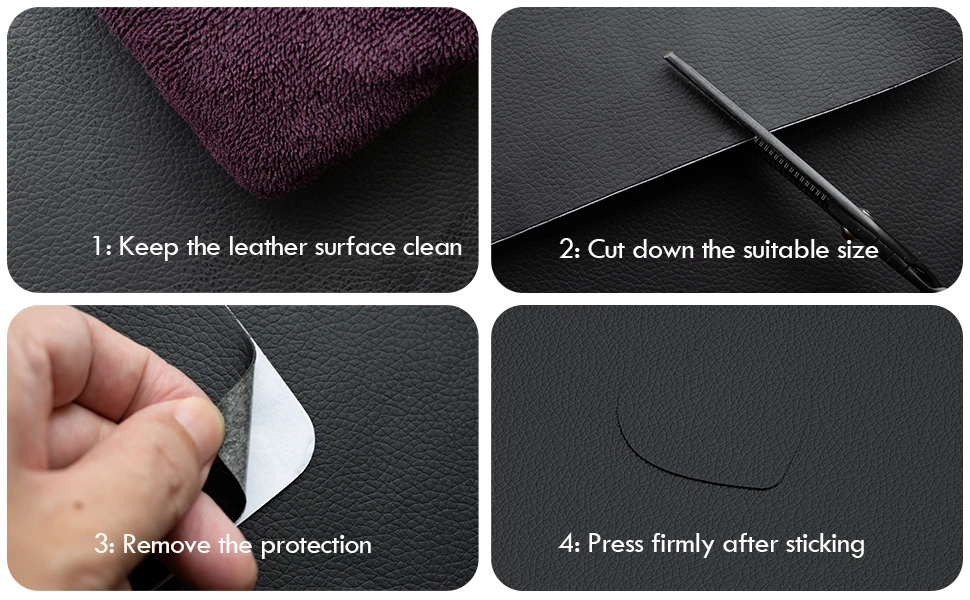
- Quick Alternative: If you want to avoid the drying time associated with liquid glues, you can use a self-adhesive leather patch. These are pre-cut and textured, allowing you to simply peel and stick for an immediate, waterproof fix.
Prepare the Area Before Repairing
To successfully figure out how to repair a hole in leather, proper preparation is non-negotiable. If the surface is greasy or dirty, the adhesive simply won\’t bond effectively to the material.
- Clean the Surface: I always recommend mixing a solution of warm water and white vinegar (a 1:1 ratio works best). Use a clean cloth or cotton swab to wipe the area around the damage using gentle circular motions. This lifts dirt without harming the grain.
- Trim the Edges: If the tear has jagged edges or \”stray threads\” sticking out, carefully snip them off with sharp scissors. You need a clean, smooth edge for a seamless finish before applying any leather repair gel.
- Dry Completely: Allow the spot to dry naturally. Be careful not to soak the leather during cleaning, as saturation can cause further damage.
- Test for Safety: Always test your cleaning solution on a hidden spot first to ensure it doesn\’t negatively react with the dye.
Reinforce with a Sub-Patch (For Structural Holes)
If you are dealing with a deep puncture or tear, you cannot simply glue the edges together; you need to build a foundation from the inside. This is the core secret of how to repair a hole in leather permanently. We use a \”substrate\” method to provide internal support, ensuring the repair holds up against daily wear.
Follow these steps for a solid sub-patch:
- Prepare the Backing: Cut a piece of durable fabric, such as denim or canvas, slightly larger than the hole itself.
- Round the Edges: always trim the corners of your patch into a rounded shape. Sharp, square corners are more likely to catch or peel inside the cushion.
- Insert and Flatten: Using tweezers, carefully slide the patch into the hole. Flatten it out completely to prevent any unsightly bulges on the surface.
For those who want a faster solution without handling separate fabric and glue, using a pre-cut self-adhesive leather patch is an excellent alternative. These peel-and-stick options work wonders for surface-level holes, allowing you to bypass the complex sub-patching process entirely.
Apply Glue and Bond the Repair
Once your sub-patch is positioned correctly inside the void, the next step in how to repair a hole in leather is securing the bond. This stage requires precision to ensure the structural integrity of the repair.
The Gluing Process:
- Apply Adhesive: Using a toothpick or a fine applicator from a 11 Set Micter Leather Craft Tools Kit, carefully apply a flexible leather glue to the underside of the leather edges and the top of the sub-patch material. Do not over-apply; a thin, even layer prevents lumps.
- Press and Hold: Push the leather edges down onto the patch. Gently pull the edges toward each other to minimize the gap, creating a seamless look. Apply steady pressure with your fingers for 5 to 10 minutes to establish the initial tack.
- Cure with Tape: To keep the edges locked in place while the glue sets, apply masking tape across the seam. This prevents the leather from pulling back as it dries. Allow the repair to cure for 1 to 2 hours before removing the tape.
Alternative: Using Micter Adhesive Patches
If you are using a Micter self-adhesive patch, the process is significantly faster. There is no need for liquid glue or long drying times. Simply ensure the area is clean and dry, cut the patch to size, peel off the backing, and press it firmly over the damage. The textured finish blends immediately, making the leather look as good as new in seconds.
Fill and Smooth the Surface
Once the sub-patch has bonded and the glue is fully cured, the structural repair is complete, but the surface will likely look uneven. To restore the look of the item, I use a specialized leather filler for holes (often called leather putty) to fill the gap left by the missing material.
I recommend using a palette knife to apply the filler. The key here is patience; do not try to fill a deep gouge in a single pass. Instead, apply the compound in thin layers, allowing each layer to dry completely before applying the next. This prevents the filler from shrinking and ensures a solid, durable finish. If you need precise instruments for this stage, a good set of professional leather craft tools can make spreading and leveling the compound much easier.
Steps for a Seamless Surface:
- Layering: Build up the filler gradually until it sits slightly above the surrounding surface.
- Drying: Allow ample drying time between applications to avoid cracking.
- Sanding: Once the final layer is dry, use fine-grit sandpaper to gently smooth the area. Sand until the filler is perfectly level with the rest of the leather.
Tip: If you are mending perforated leather, use a toothpick to carefully re-punch the ventilation holes after the filler cures but before you apply color, ensuring the texture matches the original design.
Color Matching and Sealing the Repair
Getting the structural work done is only half the battle; now we need to make it invisible. To successfully finish learning how to repair a hole in leather, you must restore the color and sheen so the patch blends perfectly with the original material.
- Apply Colorant: Select a leather colorant that matches your item exactly. I recommend applying this in very thin layers using a sponge or soft cloth. Dabbing the product on helps create a texture that mimics the natural grain better than brushing.
- Build Gradually: Allow the color to dry completely between coats. It is far better to apply three thin coats than one thick one to avoid a plastic-like appearance.
- Seal the Surface: Once you are satisfied with the coverage, apply a leather sealant. This step is non-negotiable as it locks in the pigment and prevents the dye from transferring to clothing, ensuring a durable car leather seat repair.
Finish by gently buffing the area to match the natural shine of the surrounding leather. This final detail is what separates a noticeable DIY patch from a seamless, professional-looking restoration.
Prevention and Maintenance Tips
Once you have successfully managed to repair a hole in leather, maintaining the integrity of the material is essential to ensure the bond holds. I always emphasize that patience and detail during the repair process must be followed by consistent care.
- Regular Conditioning: Leather is skin; it needs moisture to remain flexible. Applying a leather conditioner after repair helps lock in the colorant and keeps the surrounding area from drying out or cracking again.
- Minimize Friction: On high-traffic furniture, using a throw or cover can significantly extend the life of your work. This reduces stress on the newly bonded sub-patch and prevents the edges from lifting.
- Catch Problems Early: It is far more cost-effective to restore damaged leather when the issue is just a minor scratch or small puncture. Keeping a comprehensive leather sofa repair kit on hand allows you to address these small defects immediately, ensuring you don\’t end up with a tear too large for a DIY fix.
When to Seek a Professional Leather Hole Fix
While I always encourage a DIY approach—which typically costs between $0 and $20 if you have basic household tools—there are specific scenarios where calling an expert is necessary. If you are dealing with an exceptionally large tear or the leather is too brittle, a standard home repair might not provide the structural integrity required.
Consider hiring a professional if you face these issues:
- Structural Damage: The hole is in a high-stress area where a simple denim sub-patch isn\’t strong enough to hold the tension.
- Antique or High-Value Items: If the item is rare or expensive, the risk of a texture or color mismatch isn\’t worth the savings.
- Color Matching Failures: If you cannot blend the filler or dye seamlessly, a pro can custom-mix the exact shade to restore damaged leather.
If your damage is borderline, you might just need better supplies. Sometimes, upgrading to a specialized leather repair kit gives you the professional-grade glue and filler needed to avoid the upholstery shop. However, if the hole remains unstable after your best efforts, seek a professional leather hole fix to ensure the longevity of your furniture or car interior.