Identify Your Leather Type and Scratch Severity
I’ve been there—you look down at your favorite sofa or car seat and see a fresh mark. Whether it’s from a pet’s claw or a rogue set of keys, the frustration is real. But before you jump into leather scratch repair, you have to know exactly what material you are working with. Using the wrong technique on the wrong surface can lead to permanent damage.
Categorizing Common Leather Types
Identifying your material is the first step toward a successful leather scuff repair. Most items fall into these four categories:
- Finished (Pigmented) Leather: The most common type found in furniture and car interiors. It has a durable topcoat that resists water and stains.
- Aniline/Semi-Aniline Leather: High-end, natural-looking leather. It is very porous and lacks a thick protective layer, making it prone to darkening.
- Suede and Nubuck: These have a \”nap\” or fuzzy texture. They are highly sensitive and require specialized dry-cleaning methods.
- Faux Leather and Vinyl: Synthetic materials. Vinyl leather repair focuses on heat-curing or specific flexible adhesives rather than traditional conditioners.
The Water Drop and Touch Test
To confirm your leather type, I recommend these two quick tests:
- The Water Drop Test: Place a single drop of water on an inconspicuous area. If it beads up, you have finished leather. If it soaks in and darkens the spot, it is aniline.
- The Touch Test: Run your fingernail (lightly!) over a hidden area. If it leaves a light mark that can be rubbed away with your thumb, it\’s likely a wax-heavy pull-up leather.
Assessing the Damage: Scuffs vs. Gouges
Not all damage is created equal. Understanding the depth of the injury determines your leather repair kit needs:
- Light Scuffs: These are surface-level marks where the color is slightly rubbed off, but the leather fiber is intact.
- Moderate Scratches: You can feel these with your fingernail. The top layer of the leather has been breached.
- Deep Leather Gouge Fix: This is when fibers are shredded or a piece of the leather is physically hanging off. This requires a DIY leather filler to restore the surface.
Knowing the Limits: When DIY Isn\’t Enough
I pride myself on helping people master home restoration, but you must know when to step back. You should consider professional help if:
- The leather is brittle or rotting (cracking like an eggshell).
- The \”scratch\” is actually a structural tear longer than two inches.
- The damage is on a vintage heirloom where the leather is paper-thin.
For most everyday wear, a proper leather furniture restoration plan can make your pieces look brand new again.
Essential Tools for a DIY Leather Repair Kit
Building an effective leather repair kit doesn\’t require a professional workshop. I’ve found that having a mix of everyday items and specialized supplies on hand allows you to tackle leather scratch repair the moment damage happens.
Must-Have Items for Immediate Fixes
You can often start the restoration process with basic household items to prep the surface:
- Microfiber Cloths: Essential for lint-free cleaning and buffing.
- Distilled Water: Best for wiping down surfaces without leaving mineral spots.
- Mild pH-Neutral Soap: Helps lift surface oils that prevent fillers from sticking.
- Rubbing Alcohol: Used sparingly to degrease specific areas before a deep fix.
Professional Supplies for Deep Restoration
For more advanced work, you need tools that offer precision. I recommend keeping a set of Micter leather making tools in your kit to handle intricate stitching or trimming around damaged areas.
- Leather Cleaners & Conditioners: These keep the material supple and prevent future cracking.
- Flexible Leather Filler: A must for \”building back\” the surface of deep gouges.
- Fine-Grit Sandpaper (1200+ grit): For smoothing out rough edges before applying color.
Why I Recommend Micter Patches
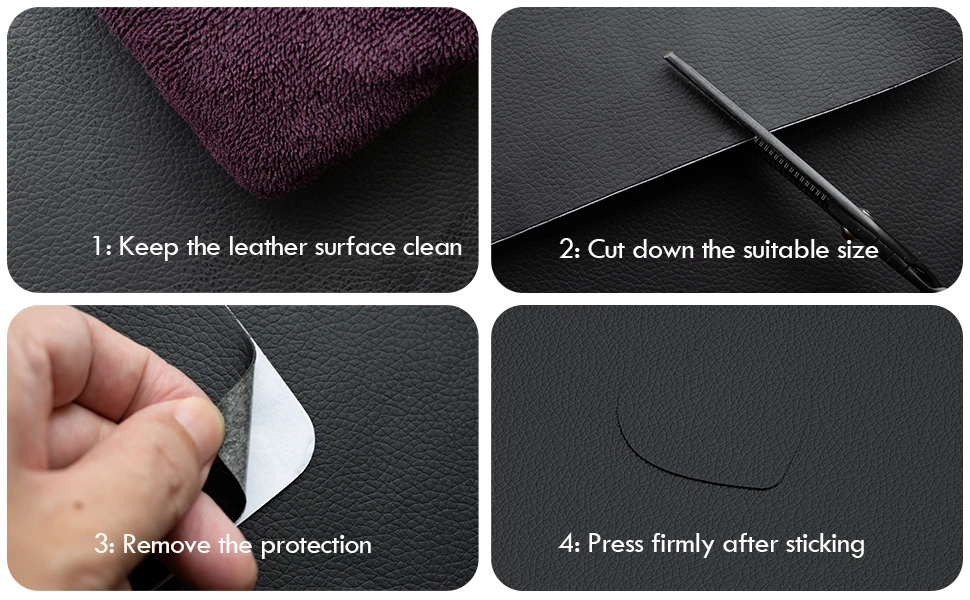
If you want a seamless, professional finish without the mess of liquid glues and dyes, Micter patches are the ultimate shortcut. They are designed for a one-step permanent fix—just peel and stick. These patches are a core part of any modern leather repair kit for scratch damage because they match the grain and durability of original leather instantly.
Safety First: The Hidden Spot Test
Never skip the \”hidden spot\” test. Before applying any chemical or adhesive from your leather repair kit, try it on an inconspicuous area like the underside of a sofa or the bottom of a bag. This confirms the product won\’t cause discoloration or change the texture of your leather before you commit to the visible repair leather scratch area.
How to Fix Light Leather Scuff Repair and Surface Scratches
When dealing with minor surface damage, the goal is to blend the mark back into the natural grain. These \”healing\” steps are perfect for those annoying fingernail marks or light abrasions that haven\’t broken through the hide.
Step 1: Deep Cleaning the Surface
Before I touch any repair tools, I ensure the area is completely free of oils, dust, and body salts. Use a mild leather cleaner and a microfiber cloth. Cleaning ensures that any leather conditioner for scratches or oils you apply later can actually penetrate the material rather than just sitting on top of the grime.
Natural Remedies and Buffing Techniques
For very light marks, you can often \”massage\” the scratch away. I’ve found that high-quality conditioners are the most reliable, though some DIYers use tiny amounts of olive oil or petroleum jelly.
- Apply: Dab a small amount of product onto a soft cloth—never directly on the leather.
- Buff: Use firm, circular motions to buff the area. The heat generated by friction helps the leather fibers absorb the moisture.
- Blend: Continue buffing outward to ensure there are no greasy rings or dark spots.
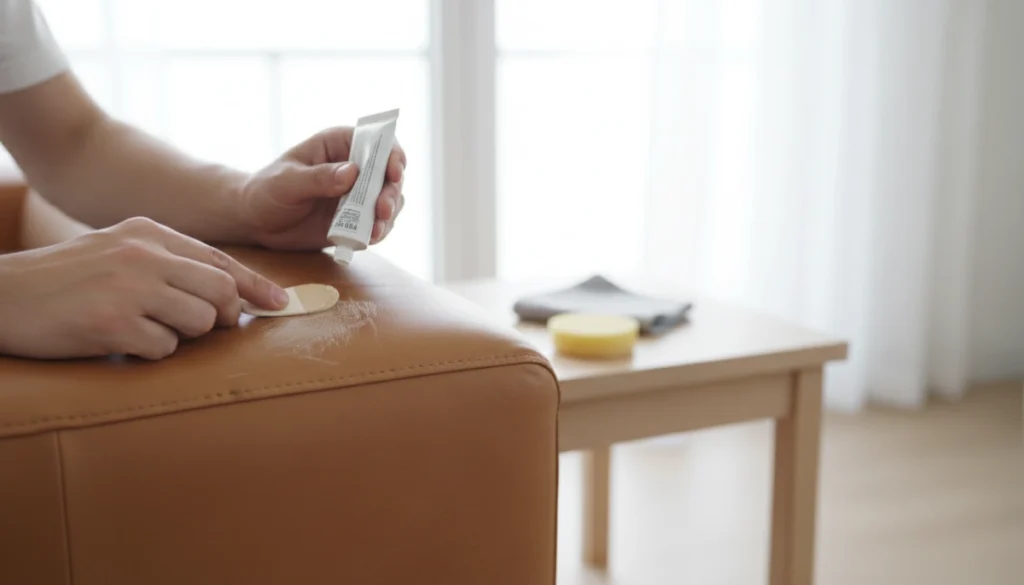
If the scuff is a bit more stubborn, applying a specialized leather repair gel can fill in the microscopic gaps while maintaining the leather\’s flexibility.
Expected Results for Surface Restoration
For light leather scuff repair, you should see the \”ashy\” or white look of the scratch disappear. While the leather might look slightly darker immediately after treatment, it will even out as it dries. This process essentially re-hydrates the damaged fibers, making the surface look uniform and supple again. For a deeper dive into the process, I’ve put together a guide on how to repair leather furniture to help you get the best possible finish.
Repairing Moderate to Deep Leather Scratch Repair
When you are dealing with a deep leather gouge fix, a simple conditioner won\’t cut it. You need to physically rebuild the surface to ensure the leather scratch repair is permanent and blends perfectly with the rest of the piece.
Prep Work and Leveling
- Deep Cleaning: Use a dedicated leather cleaner to strip away oils, wax, and dirt. This ensures the repair materials bond correctly to the fibers.
- Gentle Sanding: Use fine-grit sandpaper (around 1200 grit) to smooth out any frayed edges or \”burrs\” around the repair leather scratch site.
- Applying DIY Leather Filler: For deep indentations, apply the filler in thin, even layers. Don\’t try to fill it all at once; building it up gradually prevents the material from shrinking or cracking as it dries.
Achieving a Seamless Finish
- Color Match Leather Repair: Once the filler is dry and level, use a color-matching kit to mix dyes that mimic the exact shade of your leather. Dab the color on with a sponge to recreate the natural texture.
- The Micter Shortcut: If you want to bypass the complexity of fillers and dyes, my Micter patches offer a one-step permanent fix. For a professional result without the mess, self-adhesive leather patches are the fastest way to cover deep damage while maintaining a high-quality look.
Finishing and Conditioning
- Drying: Allow the repair area to air dry naturally. Avoid using hair dryers on high heat, as this can make the surrounding leather brittle.
- Buffing: Once fully cured, buff the area with a soft cloth to match the sheen of the original material.
- Protection: Apply a leather conditioner to the entire surface to hydrate the material and seal the repair.
For those managing larger restoration projects, a leather couch patch kit provides the necessary tools to handle significant surface damage efficiently. Using these professional-grade supplies ensures your leather furniture restoration lasts for years rather than weeks.
Tackling Pet Damage on Leather Sofa and Other Specific Items
Cat Scratch Leather Repair for Couches
Pets are family, but their claws can be a nightmare for your furniture. When I deal with cat scratch leather repair, I focus on two things: pulled fibers and punctures. If the claws have created fuzzy, frayed edges, you’ll need to carefully trim those away before starting. For deeper punctures on a pet damage leather sofa, using a specialized leather sofa repair kit is the best way to fill the holes and stabilize the surface so the damage doesn\’t spread.
Car Seat Leather Scratch Repair and High-Traffic Wear
Automotive interiors face extreme temperature swings and constant friction. Car seat leather scratch repair requires products that can handle that stress without peeling. I prioritize cleaning the area thoroughly to remove body oils and dirt first. For seats that are starting to show their age beyond just surface marks, addressing car seat leather crack repair early on prevents a small scuff from turning into a full-blown upholstery replacement.
Quick Fixes for Leather Bags, Jackets, and Shoes
Daily wear and tear on accessories usually results in unsightly scuffs. For a leather bag scuff repair, a simple color-matched balm or cream usually does the trick.
- Jackets: Focus on flexible fillers that move with the garment.
- Shoes: Use high-pigment polishes for leather shoe scratch repair to hide deep scrapes on the toes or heels.
- Suede: Suede scratch removal is different—never use liquids. I use a stiff dry brush or a suede eraser to \”re-fluff\” the fibers and blend the scratch away.
| Item Type | Common Damage | Best Repair Tool |
|---|---|---|
| Sofa | Cat punctures/scratches | Flexible filler & color match |
| Car Seat | Bolster scuffs & cracks | Heavy-duty leather dye |
| Handbag | Corner scuffs | Leather touch-up pen |
| Suede Shoes | Surface scrapes | Suede brush & eraser |
Prevention Strategies for Leather Furniture Restoration
Maintaining your leather is far easier than performing a major leather scratch repair later. I’ve found that a proactive approach doesn\’t just keep the furniture looking new—it saves you a lot of money on professional restoration services.
The Power of Quarterly Conditioning
Leather is a natural material that needs moisture to stay flexible. When it dries out, it becomes brittle and prone to surface scuffs.
- Routine: Apply a high-quality conditioner every 3 to 4 months.
- Result: Supple leather can \”absorb\” minor pressure that would otherwise require a leather repair kit for scratch marks.
- Protection: Conditioning creates a thin protective layer that resists spills and oils.
Using Protective Barriers
If you have pets or kids, you know that high-traffic areas take a beating. To avoid a difficult cat scratch leather repair, I recommend using physical barriers on vulnerable spots like armrests and corners. You can easily apply a self-adhesive leather patch to high-wear zones to prevent claws from ever reaching the original hide. This acts as a sacrificial layer that is much cheaper to replace than the sofa itself.
Managing Sunlight and Heat
Direct environment is the biggest factor in cracking and future damage. Constant heat exposure pulls the natural oils out of the fibers, leading to deep fissures.
- Placement: Keep leather pieces at least two feet away from radiators or heating vents.
- UV Protection: Use curtains or UV-filtering window film to block direct sunlight, which causes fading and structural weakness.
- Restoration: If you notice the surface starting to stiffen, you should repair cracked leather immediately before the damage turns into a full-depth tear.
| Prevention Method | Frequency | Benefit |
|---|---|---|
| Conditioning | Every 90 Days | Prevents peeling and light scuffs |
| Dusting | Weekly | Removes abrasive grit that scratches the finish |
| Shielding | Constant | Blocks UV rays and pet damage |
Choosing Between Home Restoration and Professional Help
Deciding whether to handle a leather scratch repair yourself or hire a specialist comes down to the size of the damage and your budget. I always recommend evaluating the \”true cost\” before starting. While a professional might charge hundreds for a single visit, a high-quality leather repair kit or a specialized patch costs a fraction of that and often delivers a nearly identical result for standard wear and tear.
DIY vs. Hiring a Specialist
| Factor | DIY Leather Restoration | Professional Specialist |
|---|---|---|
| Average Cost | $15 – $50 | $150 – $500+ |
| Time Investment | 30 – 60 minutes | 2 – 7 days (including booking) |
| Skill Level | Beginner friendly | Expert/Master |
| Best For | Scratches, scuffs, small punctures | Massive tears, structural rot |
Red Flags: When DIY Isn\’t Enough
While you can easily fix scratches on leather couch cushions at home, some damage requires a pro. You should seek professional help if:
- The leather is \”dusting\” or crumbling due to extreme dry rot.
- The tear or gouge is larger than 3 inches and affects the structural integrity of the seat.
- The damage involves complex stitching or internal foam replacement.
For most automotive issues, such as scuffs from entry and exit, you can successfully repair a tear in a leather car seat using professional-grade patches or fillers without the dealership markup.
Verdict: Maximizing Your Leather Investment
The key to successful leather furniture restoration is speed. Addressing a small scratch today prevents a massive tear tomorrow. I find that most homeowners get the most value by keeping a reliable leather scratch repair solution on hand. By using a \”fix-it-as-it-happens\” approach, you maintain the resale value of your furniture and car interiors while avoiding the high costs of professional upholstery shops. Invest in quality tools once, and you’ll save thousands over the lifespan of your leather goods.