Understanding Scratches on Leather Handbags
We’ve all been there—that heart-sinking moment when you notice a fresh mark on your favorite investment piece. To effectively fix scratches on leather purse surfaces, you first need to understand what you’re up against. Leather is essentially skin; while it’s incredibly durable, its organic fibers are susceptible to friction and sharp objects.
Why Leather Scratches Easily
Because leather is porous and treated with various oils and waxes, its surface can be displaced or torn. The \”damage\” is often just a disruption of these protective layers or the delicate grain underneath. Factors like dryness make the material more brittle, leading to easier leather bag scratch repair needs.
Surface Scuffs vs. Deep Gouges
Identifying the severity of the damage is the first step in leather handbag restoration.
| Scratch Type | Description | Depth |
|---|---|---|
| Surface Scuff | A light rub that affects only the pigment or wax coating. | Superficial |
| Light Scratch | A visible mark that hasn\’t broken through to the fibers. | Epidermal |
| Deep Gouge | A tear or \”crater\” where the internal fibers are exposed. | Structural |
Identifying Your Leather Type
Before you attempt any DIY leather scratch repair, you must know what your bag is made of. Different finishes react differently to moisture and heat:
- Pigmented (Protected) Leather: Has a heavy coating of color and a clear topcoat. This is the easiest to repair.
- Aniline/Semi-Aniline: Very natural with little to no coating. These absorb liquids quickly and require extreme care.
- Suede and Nubuck: Buffed surfaces with a \”nap.\” These require specialized tools—never use heavy creams here.
The Quick Fingernail Test
Not sure what finish you have? Try the fingernail test. Lightly scratch a tiny, inconspicuous area (like the bottom or inside a seam) with your nail.
- If it leaves a light mark that you can rub away with your thumb: You likely have a wax or oil-heavy finish.
- If it leaves no mark at all: You’re dealing with a durable, pigmented leather.
- If the spot darkens or stays marked: You have a delicate aniline finish.
Knowing this distinction ensures you choose the best leather conditioner for scratches without accidentally staining the material.
Essential Prep for Leather Handbag Scratch Repair
Before I dive into any leather purse scratch repair, I always ensure the foundation is set. Proper preparation is the difference between a seamless leather handbag restoration and a botched DIY job. Addressing the damage early prevents fibers from fraying and keeps the leather from drying out.
The Critical Hidden Spot Test
I never apply a product to a bag without testing it first. Find a small, inconspicuous area—like the bottom or the inside of a strap—to ensure your supplies don\’t cause discoloration. If the leather darkens permanently or the finish changes, stop immediately and reassess your materials.
Gathering Your DIY Repair Supplies
To fix scratches on leather purse surfaces effectively, keep these essentials in your leather repair kit for purses:
- Microfiber Cloths: Use these for cleaning and buffing to avoid adding new scuffs.
- Leather Conditioner: A premium conditioner is the best leather conditioner for scratches that are only surface-level.
- Repair Compound: For deeper damage, a high-quality leather repair gel is necessary to fill the gaps.
- pH-Balanced Cleaner: This removes surface oils so the repair products can bond correctly.
Workspace Setup and Timing
When you notice a deep scratch on leather handbag material, the clock starts ticking. Exposed fibers can absorb moisture and dirt, making the damage harder to hide later.
- Work in Bright, Natural Light: This is crucial for accurate color matching leather repair.
- Clear the Area: Set up on a flat, clean surface to avoid getting dust trapped in your repair compounds.
- Clean the Bag First: Always wipe down the area around the scratch to ensure no grit is rubbed into the leather during the DIY leather scratch repair process.
How to Fix Light Surface Scratches and Scuffs on Your Handbag
Most minor marks on your bag are just displaced fibers rather than permanent damage. I’ve found that you can often fix scratches on leather purse surfaces using simple friction and moisture to redistribute the material. Understanding how to repair a scratch in leather starts with these gentle, non-invasive methods.
The Warmth and Oil Rub Technique
Before reaching for heavy chemicals, use the natural oils and heat from your own body. This is the safest way to remove scuffs from leather bag exteriors without changing the color:
- Clean the area with a dry microfiber cloth.
- Rub the scratch firmly in a circular motion with your thumb.
- Apply gentle heat to help the leather’s natural oils migrate back into the scuff.
Applying Leather Conditioner
If friction isn’t enough, a high-quality leather conditioner for scratches is your best tool. It hydrates the fibers, making the scratch blend back into the surrounding area. Simply apply a pea-sized amount to a soft cloth and massage it into the leather. This not only hides the mark but also adds a layer of protection against future wear.
The Vaseline Quick-Fix Hack
For a fast, budget-friendly solution, a tiny dab of Vaseline can work wonders on pigmented leathers. It acts as a temporary filler and shine enhancer.
- Apply a very thin layer to the scuff.
- Let it sit for 5 minutes.
- Wipe away every bit of excess to prevent a sticky residue.
Buffing for a Perfect Shine
The final step in any DIY leather scratch repair is the buff. Use a clean, lint-free cloth or a horsehair brush to buff out leather scratches until the sheen is uniform. This ensures the repaired area doesn\’t look dull or greasy compared to the rest of the bag, leaving your leather looking restored and vibrant.
Fixing Deep Scratches and Gouges on Purses
When you are dealing with a deep scratch on a leather handbag, a simple surface rub won’t be enough. To truly restore a scratched leather handbag that has suffered a structural gouge, you need to rebuild the lost material and blend the color perfectly.
Clean and Prep the Surface
I always start by cleaning the damaged area to ensure the repair bond is permanent.
- Use a pH-balanced leather soap to remove any dirt or old oils from the gouge.
- Gently trim any frayed leather fibers around the edges of the scratch so the surface is flush.
- Ensure the area is completely dry before moving to the filler stage.
Filling the Gaps with Leather Compound
To fix scratches on leather purse surfaces where the leather is actually missing, you must use a flexible leather filler or compound. This acts as a \”synthetic skin\” to level the surface.
- Apply thin layers of leather filler using a small palette knife or spatula.
- Press the compound into the deep scratch, smoothing it out so it aligns with the rest of the bag.
- Let it air dry. If the filler shrinks, apply a second thin layer until the surface is even.
Color Matching and Sealing the Repair
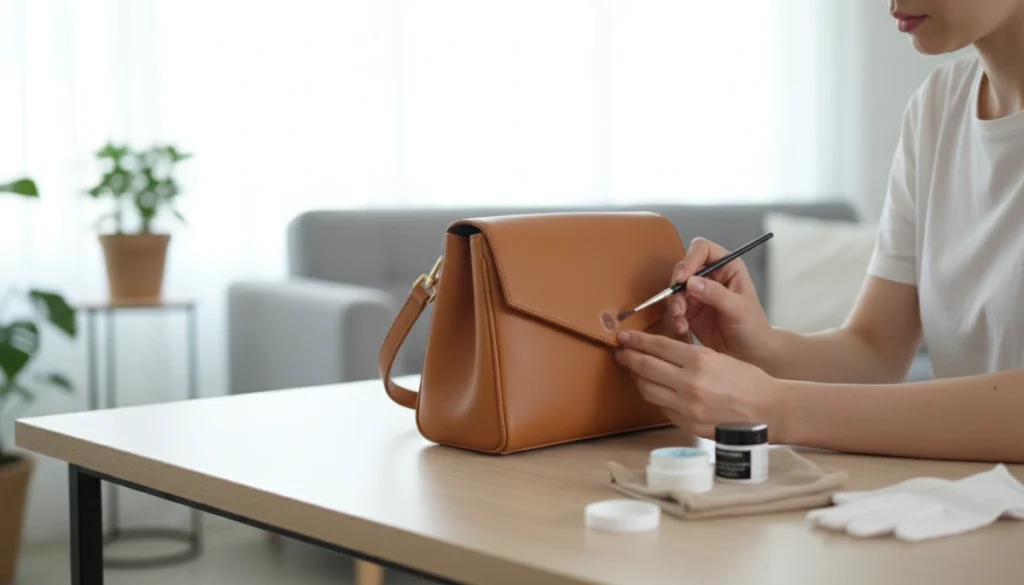
Once the filler is set, the key is color matching leather repair to make the damage disappear. I find that using leather dye marker pens is the most effective way to blend the repair without making a mess.
- Apply Color: Use a leather touch up marker that matches your bag’s original hue. Layer the color slowly rather than applying one heavy coat.
- Seal the Work: Once the color is dry, apply a leather finisher or sealant to lock in the dye and prevent it from transferring onto your clothes.
- Condition: Finish the leather handbag scratch repair by applying a high-quality conditioner over the entire bag to ensure a uniform sheen and texture.
Material Specific Tips for Different Bags
Not every leather handbag scratch repair follows the same rules. Different finishes require unique approaches to avoid permanent damage. I’ve found that the wrong product on a delicate skin can often do more harm than the scratch itself.
Tailored Care by Leather Type
| Leather Type | Characteristics | Best Repair Method |
|---|---|---|
| Smooth & Pigmented | Durable, coated with color | Leather cream or color matching leather repair |
| Aniline | Natural, porous, no coating | Specialized aniline restorer (Avoid oils!) |
| Saffiano | Cross-hatch texture, wax-treated | Soft brush cleaning and wax-based buffing |
| Suede & Nubuck | Napped, fuzzy surface | Crepe brush or suede eraser |
Handling Special Finishes
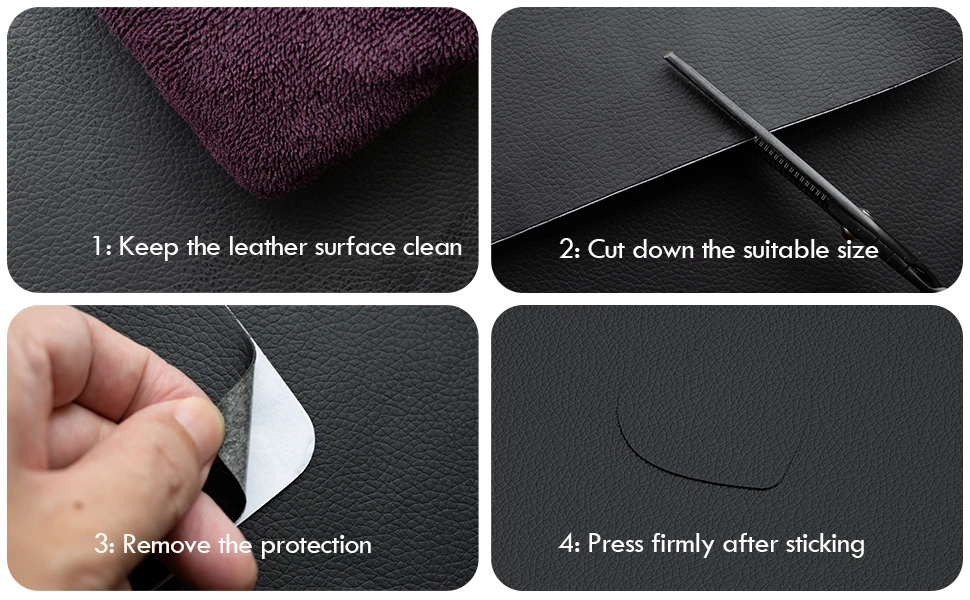
- Pigmented Leather: This is the most common material for designer bags. Because it has a protective top coat, you can easily remove scuffs from leather bag surfaces using a damp cloth and high-quality conditioner. If the damage is more than a scuff, applying a self-adhesive leather patch provides a seamless fix for larger areas without the mess of liquid glues.
- Aniline Finishes: These are \”naked\” leathers. They soak up everything. Never use heavy waxes here. Use a clean, dry microfiber cloth to gently rub out light marks.
- Saffiano Leather: The texture hides a lot, but deep scratches can ruin the pattern. Use a soft-bristled brush to remove dirt from the grooves before applying a light wax to fix scratches on leather purse exteriors with this specific finish.
- Suede Handbag Scratch Repair: Water and oils are the enemy. To fix a \”scratch,\” you are actually just realigning the fibers. Use a dedicated suede brush to lift the nap and hide the mark. For persistent spots, a high-quality leather repair patch can be cut to size for discreet internal reinforcements.
Best Products for Leather Handbag Scratch Repair
Choosing the right supplies is the difference between a seamless fix and a messy eyesore. I recommend focusing on high-quality formulas that penetrate the fibers rather than just sitting on the surface.
Top-Rated Leather Conditioners for Scratches
For light scuffs, a premium leather conditioner for scratches is often all you need. These products hydrate the leather, allowing the fibers to swell slightly and hide minor abrasions.
- Beeswax-based balms: Great for adding a protective layer and a rich sheen.
- Lanolin conditioners: Perfect for softening the leather and blending out friction marks.
- Neatsfoot oil: Best for heavy-duty restoration, though it may darken light colors.
Recommended DIY Leather Repair Kits
When dealing with deep gouges or peeling, a specialized leather repair kit for purses is the most effective solution. To achieve a factory-grade finish, I suggest using professional-grade leather making tools to precisely apply fillers and manipulate the material. If you are dealing with structural damage or large areas, a versatile leather repair kit provides the necessary bonding agents to stabilize the leather before you move on to color restoration.
How to Pick the Right Color Match
Getting the color right is the most critical step in DIY leather scratch repair. Even a slight mismatch will make the repair stand out.
| Product Type | Best Use Case | Color Matching Tip |
|---|---|---|
| Leather Touch-up Markers | Small, narrow scratches | Choose a shade slightly lighter than the bag; you can always layer to darken. |
| Coloring Balms | Faded areas and large scuffs | Test on a hidden seam first to see how it dries. |
| Repair Compounds | Deep holes or tears | Mix primary colors slowly to achieve a custom color matching leather repair. |
Always check the leather finish before buying. A product meant for matte leather will look out of place on a high-gloss patent bag. Stick to water-based dyes for most modern handbags to ensure the leather remains supple and doesn\’t crack over time.
How to Prevent Future Leather Scratches
I’ve found that the best way to handle a leather handbag scratch repair is to make sure you never need to do it in the first place. Proper maintenance creates a protective barrier that keeps your bag resilient against daily wear and tear.
Establish a Regular Conditioning Schedule
Dry leather is brittle and much more likely to sustain permanent damage. To prevent leather scratches, you should apply a high-quality leather cream every three to six months, depending on how often you use the bag. This keeps the fibers supple, allowing the material to \”flex\” rather than tear when it hits a sharp edge.
Smart Storage and Dust Bag Tips
- Always Use Dust Bags: Never store your purse exposed. A breathable cotton dust bag protects the surface from closet friction and accidental nicks.
- Avoid Wire Racks: Store your bags on smooth wooden or fabric-lined shelves to prevent the leather from \”imprinting\” on hard surfaces.
- Maintain the Shape: Stuff your bags with acid-free tissue paper. This prevents sagging and deep creases, which are often the starting points for surface cracks.
Daily Habits for Better Leather Care
Simple changes in how you handle your bag can eliminate the need for a leather purse scratch repair later on. I recommend keeping keys and pens in a dedicated internal pouch to prevent punctures from the inside out. For those who want to be fully prepared, having a professional leather craft tool kit on hand allows you to perform routine maintenance and catch minor issues before they escalate.
Protective Maintenance
| Action | Frequency | Primary Benefit |
|---|---|---|
| Conditioning | Every 3-6 Months | Maintains flexibility and moisture |
| Dust Bag Storage | After Every Use | Prevents closet scuffs and dust buildup |
| Surface Wipedown | Weekly | Removes abrasive salts and oils |
Consistent leather care for handbags is the only way to ensure your investment stays in gallery-ready condition. By prioritizing these daily habits, you minimize the risk of a leather bag scratch repair and keep the finish looking smooth and professional.
When to Call a Pro for Leather Handbag Scratch Repair
Knowing when to step away from the DIY bench is vital to preserving your investment. While most scuffs are manageable, certain types of damage require a master\’s touch to avoid ruining the leather permanently.
Signs a Scratch is Too Deep for DIY
If you encounter these issues, your leather handbag scratch repair likely requires professional equipment or reconstruction:
- Structural Tears: If the scratch has sliced completely through the leather grain.
- Peeling Layers: Extensive peeling on \”bonded\” or low-quality leather often can\’t be patched seamlessly.
- Rare Finishes: Exotic skins (crocodile, python) or highly metallic finishes are incredibly difficult to color-match at home.
- Loss of Integrity: If the scratch is located on a high-stress area like a handle or strap attachment point.
Professional Repair vs. Replacement
Before you commit to a leather purse scratch repair service, weigh the costs against the bag\’s current market value.
| Factor | Professional Repair | Buying New |
|---|---|---|
| Average Cost | $50 – $250+ | Retail Price |
| Timeframe | 2 – 6 Weeks | Immediate |
| Result | Restored Original | Mint Condition |
| Value | Maintains Vintage/Sentimental Value | Higher Resale Potential |
For those who want to attempt one last save on deep gouges before calling a pro, using a comprehensive leather repair kit can often bridge the gap. However, if the hardware is also damaged or the leather is rotting, a replacement is the more cost-effective choice. For intricate stitching issues that often accompany deep scratches, a specialized leather craft tools kit is essential for a clean, factory-like finish.
Ultimately, if your leather bag scratch repair estimate exceeds 50% of the bag\’s replacement cost, it is usually time to retire the piece and upgrade.
FAQ: Handbag Repair Solutions
I get these questions all the time from people trying to fix scratches on leather purses. Here is the straight talk on what works and what to avoid to keep your investment looking its best.
Can I use olive oil on leather?
I strongly advise against it. While it might look good for ten minutes, olive oil is a vegetable fat that eventually goes rancid. It can seep deep into the fibers, causing permanent dark spots and a sour smell. For a safe leather handbag scratch repair, always stick to pH-balanced conditioners or specialized oils.
How do I fix cat scratches on a purse?
Cat scratches are tricky because they often involve shredded fibers. You need to trim the loose bits first, then use a high-quality leather repair gel to fill the punctures and smooth out the surface. Once the gel cures, it creates a flexible bond that mimics the original texture.
Will shoe polish work on a leather bag?
Technically, yes, it adds color, but it’s a bad idea for bags. Shoe polish is designed for footwear and doesn\’t fully \”set\” the same way. It is highly likely to rub off on your clothes or car seat. To remove scuffs from a leather bag without the mess, use a dedicated leather touch-up marker or a specialized tinting cream.
How long does a DIY repair last?
A proper DIY leather scratch repair can last for years if done correctly. Using a comprehensive vinyl and leather repair kit ensures the materials bond permanently to the hide.
Quick Tips for Longevity:
- Clean first: Never apply repair products over dirt or body oils.
- Seal it: Use a leather protector spray after the repair is dry.
- Condition: Keep the leather hydrated so the repair doesn\’t get brittle and crack.