
Are you staring at a nasty scratch on your favorite purse and wondering if it’s ruined forever?
We’ve all been there. You love the bag, but the scuffs, tears, and frayed piping make it look tired and worn. Most people think the only options are an expensive professional repair or buying a costly replacement.
But that’s not true.
In this guide, I’m going to show you exactly how to restore your luxury items using a quality leather handbag repair kit. You’ll discover how to fix worn corners, match colors perfectly, and use Micter’s solution so that with a simple patch, the leather is as good as new.
Let’s get your handbag looking flawless again.
Common Handbag Damage: Why It Happens
We know the sinking feeling of spotting a new scratch on a favorite purse. Before diving into a leather handbag repair kit, it helps to understand exactly what we are up against. Leather is durable, but it isn\’t invincible against daily life.
Here is a breakdown of the most frequent issues we see:
- Scuffs and Scratches: These are the most common battle scars. Whether it\’s from keys jangling against the surface or accidentally brushing against a rough wall, surface abrasions compromise the smooth finish. A good leather scuff remover kit is usually the answer here.
- Tears and Holes: Catching your bag on a sharp edge can result in a structural tear. Unlike surface scratches, these require a strong adhesive solution to bond the fibers back together.
- Worn Corners and Piping: Because we constantly set our bags down on tables, floors, and counters, the bottom corners and piping take the brunt of the friction. This often leads to color loss and frayed edges.
- Fading and Stains: Sunlight is a silent enemy that fades vibrant dyes over time. We also frequently see discoloration caused by spills—specifically stubborn stains like sunscreen or foundation, which can be masked with a color-restoring dye.
- Cracking and Dryness: Without regular conditioning, leather loses its natural oils. This leads to a dry, brittle texture that eventually cracks, requiring a restoration kit that hydrates while it repairs.
Identifying the specific type of damage is the first step to choosing the right tool, whether you need a simple glue for a tear or a full color-mixing system for restoration.
DIY vs. Professional Repair: Choosing the Right Leather Bag Repair Kit
Deciding between sending your bag away for a professional restoration or handling it yourself with a leather handbag repair kit often comes down to time and money. While professional services offer expertise, they come with a hefty price tag and long wait times. For most cosmetic damage, a high-quality DIY solution is not only faster but also significantly more affordable.
Cost Breakdown: DIY vs. Pro
| Feature | DIY Repair Kit | Professional Restoration |
|---|---|---|
| Average Cost | $20 – $50 | $200 – $500+ |
| Time Required | 1–2 Hours | 4–8 Weeks |
| Convenience | Immediate fix at home | Requires shipping/drop-off |
| Best For | Scuffs, tears, fading, worn corners | Major structural reconstruction |
When to Attempt a Luxury Handbag DIY Fix
Using a leather purse repair kit is ideal for surface-level issues. If your bag suffers from scratches, peeling piping, or small tears, you can achieve professional results at home. It empowers you to maintain your collection without breaking the bank. However, if the damage is structural—such as a completely detached handle or a slashed body—you might need a pro. For those who are handy and want to tackle stitching repairs alongside surface fixes, having a 16-piece professional leather sewing set ensures you have the right heavy-duty tools for the job.
I designed Micter to bridge this gap. We focus on a simple patch method that removes the intimidation factor from the leather bag repair kit experience. You don\’t need to be an artisan to get results; our kits allow for effortless, invisible patching that makes the leather look as good as new. This approach saves you time and money while keeping your favorite accessories in rotation.
What to Look for in a Quality Leather Handbag Repair Kit
When choosing a leather handbag repair kit, the difference between a messy patch-up and a seamless restoration lies in the quality of the components. Based on rigorous testing and industry standards, you shouldn\’t settle for a generic tube of glue. A truly effective solution provides the tools necessary to rebuild the structure of the leather and perfectly match its finish.
Essential Components and Tools
A comprehensive kit goes beyond simple color correction. To handle structural damage like deep tears or burns, you need specific reinforcement materials.
- Backing Materials: For holes that go all the way through the leather, a kit must include backing fabric to provide a foundation for the filler. Alternatively, for larger surface areas, a self-adhesive leather patch offers an immediate, durable solution that reinforces the bag\’s integrity without the mess of liquid fillers.
- Application Tools: Look for spatulas, mixing jars, and applicator brushes. These are vital for spreading compounds evenly across damaged areas.
Key Features: Flexibility and Color Matching
The best kits, such as those comparable to the Fortivo Leather and Vinyl Repair Kit, offer versatile features designed for longevity.
- Flexible Formulas: Handbags endure constant movement. The repair compound must dry into an elastic finish that mimics natural leather, ensuring it won\’t crack or peel when the bag is opened or carried.
- Mixable Color Compounds: A standard leather purse repair kit should provide at least 7 to 10 mixable colors. This allows you to blend specific hues—like mixing \”chocolate\” and \”walnut\”—to achieve an exact match for your bag.
- Combined Adhesive: Premium formulas often mix the adhesive agent directly with the color compound, allowing you to seal and color the damage in a single step.
Compatibility and Safety
Before applying any product, verify that the kit is formulated for your specific material. Most high-quality vinyl handbag repair patch kits and liquid fillers work excellently on genuine leather, synthetic leather, and vinyl. However, they are generally not compatible with suede or nubuck, which require different treatment methods. Additionally, prioritize water-based, low-odor formulas that air dry within 6 to 12 hours; these are safer for home use and avoid the risks associated with heat-cure methods.
Top Recommended Leather Handbag Repair Kits
Finding the right leather handbag repair kit depends entirely on the specific issue you are facing, whether it is a deep structural tear, surface discoloration, or just general wear and tear. After testing various solutions on the market, I have categorized the best options to help you choose the right tool for the job.
The All-In-One Fixer: Fortivo Leather and Vinyl Repair Kit
For general scuffs and scratches on smooth leather, the Fortivo kit is often cited as a versatile choice. It combines the adhesive and color compound into a single formula, which simplifies the process slightly.
- Best For: Small stains, cat scratches, and light surface damage on a leather purse repair kit.
- Pros: Comes with 10 mixable colors to help dial in the right shade; decent for small touch-ups.
- Cons: Requires patience to mix the exact color; the finish can sometimes lack the natural luster of the original leather if not buffed correctly.
The Color Specialist: Leather Hero Color Restorer
If your primary issue is fading or stubborn stains—like sunscreen or makeup marks on a luxury bag—Leather Hero is the go-to for aesthetic restoration. This isn\’t a filler for holes, but rather a dye-based renovator.
- Best For: Restoring faded color and masking discoloration on a leather bag repair kit.
- Pros: Available in over 15 hues; excellent for covering blemishes without altering the leather\’s texture.
- Cons: Does not fix physical tears or cracks; strictly for color correction.
The Effortless Solution: Micter Leather Repair Patches
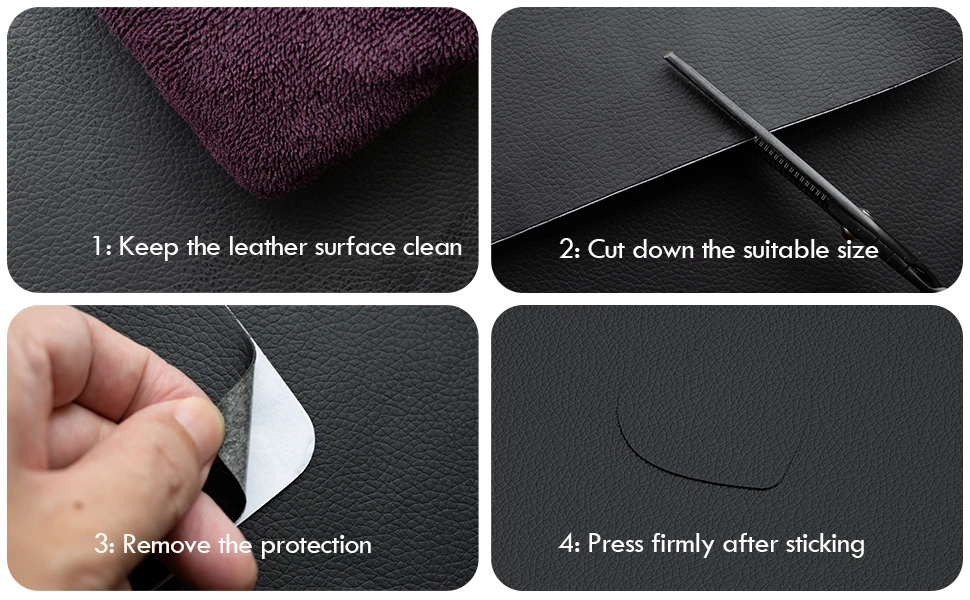
While liquid compounds and dyes have their place, they can be messy and time-consuming. For structural damage like tears, holes, or worn corners, I strongly recommend Micter. We focus on providing a solution that is practically invisible and requires zero drying time. With our leather repair patch, you simply peel and stick for an immediate fix.
- Best For: Tears, holes, peeling faux leather, and corner restoration where flexibility is key.
- Pros:
- Zero Mess: No mixing sticky compounds or guessing color ratios.
- Instant Results: A simple patch and the leather is as good as new immediately.
- Durability: Our PU leather repair patches are designed to withstand daily friction without peeling at the edges.
- Cons: Best suited for physical damage rather than just color fading.
The Maintenance Master: Chemical Guys Complete Leather Care Kit
Sometimes the best repair is prevention. While not a \”repair kit\” in the traditional sense, this set is essential for keeping leather supple and preventing the cracking that necessitates repair in the first place.
- Best For: Routine cleaning and conditioning to maintain value.
- Pros: Colorless formula works on all shades; prevents leather from drying out.
- Cons: Won\’t fix existing damage like rips or deep scratches.
Step-by-Step Guide: How to Repair Your Leather Handbag with a Kit
Restoring a beloved accessory doesn\’t have to be intimidating. Whether you are using a standard leather handbag repair kit or our specialized Micter solutions, the process generally follows a logical flow. Here is how we recommend tackling the job to ensure your bag looks professional and holds up to daily use.
1. Preparation: Clean and Test
Before applying any adhesive or color, the surface must be spotless. Dirt, oils, and conditioners prevent repairs from bonding correctly.
- Clean: Use the alcohol swab or cleaning solution provided in your leather purse repair kit to wipe down the damaged area.
- Test: Always apply a tiny amount of the compound or patch on an inconspicuous spot (like the bottom of the bag or inside a pocket) to check for color match and material reaction.
2. Fixing Scuffs and Surface Scratches
For light surface damage, the goal is to fill the abrasion without altering the texture. If you are wondering how do you repair a scratch in leather effectively, the key is layering. Apply a thin layer of color repair compound, smooth it out with a spatula, and let it dry. Repeat until the scratch is level with the surrounding surface.
3. Repairing Tears and Holes
Structural damage requires reinforcement. Standard kits often require you to insert a backing fabric behind the tear, glue it in place, and then fill the gap. This is similar to the technique used to repair a tear in leather upholstery.
The Micter Advantage:
For a faster fix, our Micter self-adhesive patches simplify this significantly. Instead of messing with liquid glues and backing fabrics, you simply peel and stick the high-quality leather patch over the tear. It provides instant structural support and covers the hole in seconds, making the leather look as good as new without the drying time.
4. Restoring Worn Corners and Edges
Handbag corners take the most abuse. To fix handbag piping restoration issues:
- Sand down any rough, peeling edges gently.
- Apply a flexible leather repair compound specifically designed for high-movement areas.
- Build it up in thin layers to reconstruct the shape of the piping or corner.
5. Color Matching and Blending
If you are using a liquid compound kit, color matching is the most critical step for an invisible handbag damage repair.
- Use the Chart: Most kits come with a mixing guide (e.g., mix Chocolate + White for a lighter brown).
- Blend Outward: Feather the color slightly onto the surrounding undamaged leather to create a seamless transition.
- Texture: For grained leather, dab the wet compound lightly with a sponge or grain paper to replicate the texture before it cures.
6. Finishing and Curing
Patience is essential for a durable result.
- Drying Time: Allow liquid repairs to cure for at least 6 to 12 hours before using the bag.
- Buffing: Once dry, gently buff the area with a horsehair brush or microfiber cloth to restore the natural sheen.
- Condition: Finish by applying a leather conditioner to the entire bag to blend the repair\’s luster with the rest of the material.
Tips for Perfect Color Matching and Invisible Repairs
Achieving a seamless finish is the most challenging part of using a leather handbag repair kit, but it is entirely possible with the right approach. The goal is an invisible handbag damage repair where the fixed area blends indistinguishably with the surrounding material.
Mastering the Color Mix
Most premium kits come with a variety of base colors—often up to 10 shades—and a mixing chart. Do not guess; follow the guide.
- Start with the Base: Select the color closest to your bag’s original tone.
- Adjust Gradually: Add tinting colors in tiny amounts. For a warm brown bag, you might mix a \”chocolate\” base with a drop of yellow or \”walnut.\”
- Test Dry: Wet repair compound often looks lighter or darker than the dry finish. Always apply a small amount of your leather repair gel to an inconspicuous spot (like the bottom of the bag) and let it dry to verify the match.
Replicating Texture for Realism
A perfectly colored patch will still look fake if it is perfectly smooth while the rest of your bag is pebbled or grained.
- Grain Papers: Use the textured release paper often included in kits. Press it onto the filler while it is still wet to imprint a leather-like pattern.
- Manual Texturing: If you don\’t have grain paper, lightly dabbing the semi-dry compound with a coarse sponge or a gloved finger can mimic natural leather pores.
Common Mistakes to Avoid
- Overfilling: Do not try to fill a deep hole in one pass. Apply thin layers, allowing each to dry, to prevent cracking and ensure flexibility.
- Rushing the Cure: While it is tempting to use the bag immediately, quality repairs typically require 6 to 12 hours to fully cure.
- Ignoring the Finish: If the repair looks too dull compared to a glossy bag, buff it gently or apply a leather sheen product to restore faded leather bag areas to their original luster.
Maintenance After Repair: Keep Your Handbag Looking New Longer
Once you have successfully restored your accessory with a leather handbag repair kit, the work isn\’t entirely over. To ensure those repairs cure properly and the rest of the bag stays pristine, establishing a routine maintenance schedule is non-negotiable. Neglect is often what leads to the cracks and fading that required a leather purse repair kit in the first place.
Regular Cleaning and Conditioning Routines
Maintenance doesn\’t need to be complicated, but it must be consistent. I always recommend a two-step process: cleaning followed by conditioning.
- Clean First: Use a dedicated leather cleaner to lift dirt, oils, and residues like sunscreen or foundation that can degrade the finish over time.
- Condition Always: After cleaning, the leather pores are open. Apply a high-quality conditioner to restore moisture. This prevents the material from drying out and cracking again.
- Inspect Hardware and Seams: While cleaning, check for loose threads or wobbly buckles. If you notice structural issues, a 35 set leather hand stitching tool kit can help you reinforce seams before they become major tears.
Protective Products and Storage
To protect your hard work, apply a leather protectant or sealant. These products create an invisible barrier against water, stains, and UV rays, which is crucial if you used a color-restoring leather bag repair kit to fix fading.
Smart Storage Tips for Longevity:
- Stuff It: When not in use, stuff your handbag with bubble wrap or parchment paper (avoid newspaper as ink transfers) to maintain its shape.
- Cover It: Always store the bag in a breathable dust bag. Never use plastic, as it traps moisture and promotes mold.
- Rest It: Don\’t hang bags by their straps for long periods, as this stretches the leather and weakens the attachment points.
Real Results: Before-and-After Transformations
Seeing is believing, especially when it comes to saving a beloved accessory. We constantly receive feedback from customers who thought their bags were destined for the trash, only to find that a quality leather handbag repair kit could completely reverse the damage. The transformation isn\’t just about covering up a spot; it’s about restoring the structural integrity and finish of the material.
Here is what typical DIY success looks like:
- The \”Cat Scratch\” Fix: One of our most common user stories involves deep claw marks on smooth leather totes. By applying a flexible filler and color compound, users achieved invisible handbag damage repair, leaving the surface smooth and uniform.
- Reviving Worn Corners: Faded, scuffed piping on the bottom of a bag makes it look aged instantly. Users report that simply dabbing on color-matched restorer creates a protective seal that blends perfectly with the original dye.
- The Micter Difference: The standout feedback we get revolves on simplicity. With Micter, it is not about complex chemistry; it is about a straightforward solution. A simple patch and the leather is as good as new.
For those dealing with more extensive restoration projects that require stitching alongside patching, having a reliable Micter leather craft set ensures you have the precision tools to handle structural seams before applying the cosmetic finish. Whether you are looking to restore a faded leather bag or fix a structural tear, the results speak for themselves—professional quality without the professional price tag.
FAQ: Common Questions About Leather Handbag Repair Kits
Can repair kits work on luxury brands like Louis Vuitton or Coach?
Yes, high-quality leather handbag repair kits are formulated to bond effectively with genuine leather, making them suitable for luxury items. However, because high-end bags often use specific finishes, we always recommend testing the compound on an inconspicuous spot, such as the bottom of the bag or the inside lining, before applying it to visible areas. For structural issues on heavy luxury items, utilizing a proper leather working tools kit ensures that any stitching or reinforcement matches the original quality of the piece.
How long do DIY repairs last?
When applied correctly, a DIY handbag scratch repair is designed to be permanent. The longevity depends heavily on the preparation and curing time. Most quality compounds, like those found in top-tier kits, require a full 6 to 12 hours to cure completely. Once cured, the repair creates a durable seal that resists peeling and cracking, even on flexible areas of the bag.
Are these kits safe for vegan leather?
Absolutely. Most versatile repair solutions are compatible not just with genuine leather, but also with faux leather, pleather, and vinyl. Whether you are performing a vinyl handbag repair patch or fixing a synthetic strap, the adhesive and color compounds bond well with synthetic surfaces. Note that these kits are generally not recommended for suede or nubuck textures.
What if the color doesn\’t match perfectly?
Color matching is the most critical part of the process. Premium kits include mixing charts and multiple base colors to help you achieve the perfect shade. If the color looks off during application, you can usually wipe it away before it dries. For complex shades, we suggest mixing small amounts and testing them against the bag\’s grain until the blend is seamless.
Is heat required for application?
Most modern leather purse repair kits utilize air-dry formulas that do not require heat tools. These compounds are safer and easier to use, eliminating the risk of burning the surrounding leather. Simply apply the filler or colorant, smooth it out, and allow it to cure naturally for the recommended time to achieve a professional finish.