Finding a fresh scratch on your leather couch is enough to ruin your day.
Whether it’s from pet damage, a stray zipper, or years of daily wear, once you see that mark, it’s all you can look at.
But here’s the good news: you don’t need to call a professional or buy a new sofa.
In this guide, I’m going to show you exactly how to repair leather couch scratches step-by-step. You’ll learn everything from simple DIY leather scratch removal using household items to professional techniques for repairing deep gouges.
I’ll even share my favorite shortcut—Micter leather repair patches—for a seamless fix that takes less than a minute.
Let’s dive right in and get your couch looking like new again.
Understanding Your Leather Couch and Scratch Type
I know the frustration of finding a fresh mark on a high-quality piece of furniture. Before learning how to repair leather couch scratch damage, I always start by identifying the specific type of leather and the depth of the injury. Genuine leather requires a specialized approach compared to synthetic alternatives to ensure the repair lasts as long as the couch itself.
Identify Your Leather Type
Different leathers react differently to oils, fillers, and cleaners. I categorize most genuine leather into three types:
- Aniline Leather: Very natural, porous, and prone to staining but develops a beautiful patina.
- Semi-Aniline Leather: A balance between a natural look and a protective coating.
- Pigmented (Protected) Leather: Features a heavy topcoat that makes it more durable and easier to clean.
Assess the Severity of the Damage
A successful genuine leather scratch fix depends on whether the damage is cosmetic or structural. I use a tiered assessment method:
- Light Surface Scratches: These are faint marks that haven\’t broken the surface. They often look like pale streaks and can usually be buffed out with a professional leather conditioner for scratches.
- Moderate Scratches: These have slightly penetrated the top layer, often caused by light pet damage on leather furniture.
- Deep Scratches and Gouges: These occur when fibers are torn or \”bridged.\” To fix cat scratches on leather sofa cushions that are this deep, I use a more intensive restoration process involving fillers and colorants.
Safety First: The Inconspicuous Test
Before applying any product from a leather repair kit for couch restoration, I always test it on a small, hidden area. This ensures the cleaner or oil won\’t discolor the hide. Following manufacturer guidelines is essential to maintain the integrity of the leather and prevent further damage during the leather couch repair process.
Essential Materials for Your Leather Couch Scratch Repair
Before you start working on how to repair leather couch scratch issues, you need to have the right supplies ready. Using the wrong products can often cause more harm than the original scratch, so sticking to professional-grade tools or tested household items is vital for a seamless result.
Basic Cleaning and Prep Supplies
To ensure any repair bonds correctly to the surface, the area must be free of dust and body oils.
- Soft Microfiber Cloths: Essential for buffing and applying products without adding new scratches.
- Mild Soap & Distilled Water: Used to create a gentle cleaning solution that won\’t leave mineral deposits.
- Leather Cleaner: A dedicated cleaner is always safer for genuine leather to maintain the pH balance.
Professional Restoration Products
For those looking for a long-term leather repair kit for couch restoration, these specialized materials are necessary:
- Leather Conditioner & Oil: These are perfect for olive oil leather repair techniques or standard moisturizing to blend light surface scuffs.
- Leather Filler or Glue: Used to bridge the gap in moderate to deep gouges, restoring the physical structure of the hide.
- Recoloring Balm or Colorant: Matches the original shade of your furniture to hide the \”scarring\” left by the scratch.
- Leather Protector: A final sealant that keeps the repair intact and prevents future pet damage.
Quick Fixes for Major Damage
If the scratch is too deep for simple buffing or if you are dealing with a significant tear, we recommend using self-adhesive leather patches. These are the most efficient tools for a durable fix, offering strong adhesion that works on both genuine and faux leather. Having a set of these on hand allows you to cover damage instantly without waiting for fillers or dyes to dry. While household items like Vaseline or shoe polish can provide temporary relief for minor scuffs, professional tools and high-quality leather repair patches ensure your sofa remains a centerpiece for years to come.
DIY Solutions for Minor Leather Couch Scuffs
If you are dealing with light surface scuffs, a simple DIY leather scratch removal process can often restore the look of your furniture without needing a full restoration kit. These marks usually only affect the pigment or the very top layer of the leather fibers.
Step 1: Surface Preparation
Before starting the repair, I always clean the area to remove surface dust and body oils. Use a soft, lint-free cloth dampened with a mixture of mild soap and distilled water. Wiping the area clean ensures that your conditioning products can penetrate the leather effectively. Always remember to test any cleaning agent or oil on a small, inconspicuous area first to ensure there is no discoloration.
Step 2: Applying Moisturizers to Blend Fibers
To effectively repair leather couch scratch marks that haven\’t broken the surface, you need to rehydrate the leather. I recommend using a high-quality leather oil or specialized leather conditioner. While some household items like olive oil or vaseline can be used in a pinch to darken the scratch, a dedicated leather conditioner for scratches provides a more stable, long-term result for genuine leather furniture.
- Apply a small amount of the product to the scratched area.
- Use gentle, circular motions to buff the product into the leather.
- Allow the leather to air dry naturally to let the fibers absorb the moisture.
Step 3: Buffing for a Seamless Finish
Once the conditioner has settled, take a clean microfiber cloth and buff the area one last time. This step is crucial for scuff removal on a leather sofa because it blends the treated area with the surrounding material for a uniform look. If the scratch is still visible, you can use a hairdryer on a low heat setting to warm the leather; this softens the natural oils in the hide, allowing you to rub the scratch out more easily during the DIY leather scratch removal process.
Pro Tips for Surface Scratches:
- Heat Application: A little warmth can help the leather\’s natural oils migrate into the scratch.
- Vaseline: For very fine, dry scratches, a tiny amount of vaseline can act as a temporary filler and shine enhancer.
- Consistency: Natural air drying is better than forced high heat, which can cause the leather to crack.
How to Repair Leather Couch Scratch: Fixing Moderate to Deep Gouges
When you are dealing with deep gouges or significant pet damage to leather furniture, a simple buffing session won\’t be enough. To effectively fix cat scratches on leather sofa surfaces where the leather fibers are actually torn or separated, you must restore the material\’s physical structure using professional-grade methods.
I recommend a systematic approach to ensure the repair is both invisible and durable:
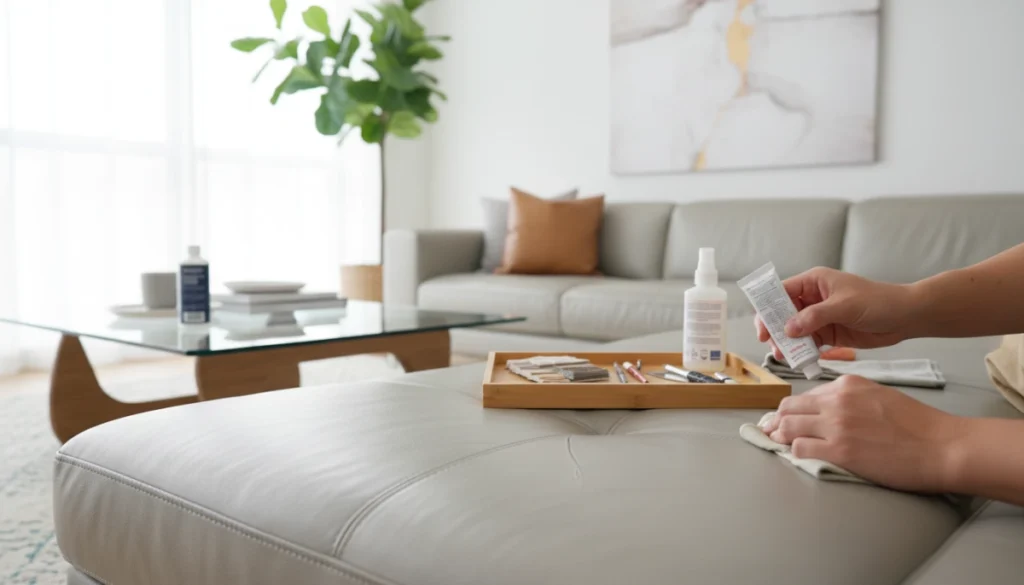
- Step 1: Surface Preparation: Clean the damaged area thoroughly with a dedicated leather cleaner. This step is vital to remove body oils and dirt that would otherwise prevent repair compounds from sticking.
- Step 2: Structural Filling: Apply a leather filler for gouges or a specialized leather glue to bridge the gap. For deep \”v-shaped\” scratches, the filler acts as a replacement for the lost leather tissue, leveling the surface.
- Step 3: Color Restoration: Once the filler has dried and leveled, apply a matching leather colorant or restorer. This is the most critical part of a color match leather repair to ensure the patch blends perfectly with the rest of the cushion.
- Step 4: Seal and Protect: The final step involves applying a leather protector. This seals the filler and colorant, providing a wear-resistant layer that mimics the original finish of the genuine leather scratch fix.
For those who need a more detailed breakdown of these steps, I have developed a guide on how to repair leather furniture that covers structural restoration in depth.
When you repair dog claws on couch sections, you often deal with multiple \”pockmarks\” or punctures. In these cases, it is best to trim away any loose, frayed leather bits with small scissors before applying your filler. This prevents the repair from looking lumpy and ensures a smooth, professional-grade result that can withstand daily use. Utilizing a high-quality leather repair kit for couch maintenance will provide the specific binders and tints needed to handle these more serious \”how to repair scratch on leather furniture\” scenarios.
The Easiest Solution: Using Micter Leather Repair Patches
When you are looking for how to repair leather couch scratch damage quickly without the mess of liquid fillers or specialized tools, Micter leather repair patches are the most efficient solution. We designed these patches to provide a seamless and durable fix that handles everything from minor scuffs to deep gouges caused by pets. They offer a professional-grade finish that restores the look of your furniture in seconds rather than hours.
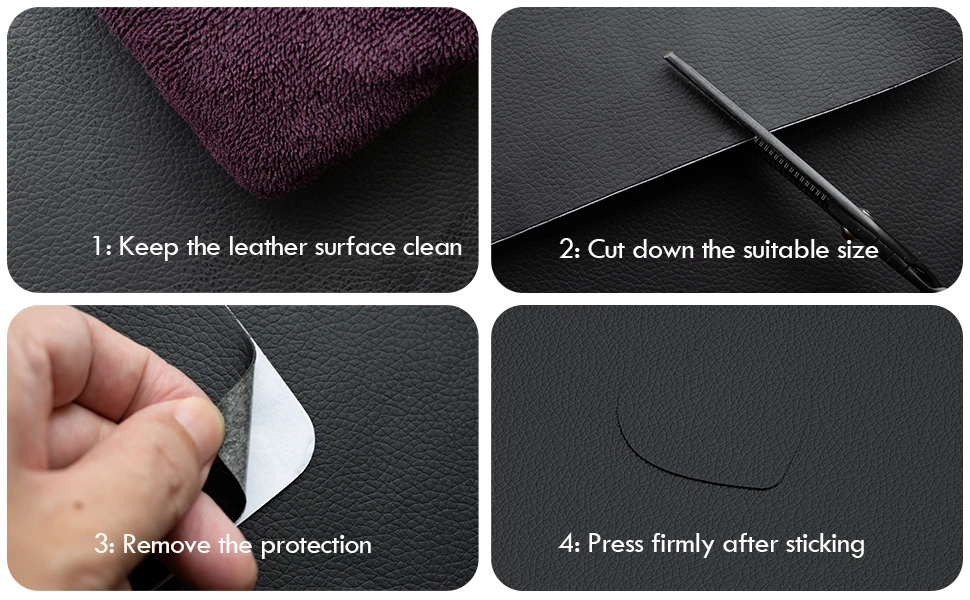
Using a self-adhesive leather patch is incredibly straightforward, following a simple four-step process:
- Clean: Wipe the surface around the scratch with a lint-free cloth to remove dust and body oils, ensuring maximum grip.
- Cut: Trim the patch to the desired shape. We recommend rounding the corners to prevent the edges from lifting over time.
- Peel: Remove the protective paper backing to expose the high-strength adhesive.
- Stick: Apply the patch directly over the scratch and press down firmly for a secure bond.
The primary benefit of this method is the strong adhesion and the wide variety of colors available, allowing you to find a near-perfect match for your sofa. These patches are engineered for versatility, making them highly effective for both genuine leather and faux leather surfaces. If you are dealing with extensive pet damage on leather furniture, using a leather couch patch kit ensures you have the right materials to cover large areas while maintaining a clean, uniform appearance. This is the most reliable way to stop a scratch from turning into a tear, keeping your couch in top condition with minimal effort.
When Professional Leather Couch Repair Is Necessary
While most minor scuffs can be handled at home, certain damage requires a specialist\’s touch to ensure the structural integrity of your genuine leather. If you are dealing with more than a surface-level issue, such as repairing cracked leather or deep structural failures, professional intervention prevents the damage from spreading.
Recognizing Severe Damage
It is time to call a professional if you notice:
- Large Tears: Rips longer than two inches that compromise the leather’s strength.
- Extensive Cracking: Web-like cracks across large seating areas that feel brittle to the touch.
- Deep Gouges: Scratches that have removed multiple layers of the hide.
- Thinning Leather: Areas where the leather has worn so thin it is translucent or about to burst.
DIY vs. Professional Restoration
| Damage Type | Best Approach | Why? |
|---|---|---|
| Surface Scuffs | DIY (Conditioner/Oil) | Easy to blend and buff out. |
| Cat Scratches | DIY (Filler/Patches) | Small enough for precision kits. |
| Major Structural Tears | Professional | Requires sub-patching and heavy-duty bonding. |
| Antique Restoration | Professional | Preserves value and uses period-accurate dyes. |
For high-end or antique furniture, expert restoration ensures the color match is flawless and the leather remains supple. If your goal is a quick and effective fix for common wear, using a leather repair kit for couch maintenance is usually sufficient. However, for total sofa overhauls involving extensive peeling or cracked leather repair, a professional can restore the piece to its original showroom condition. Knowing how to repair leather couch scratch damage starts with an honest assessment: if the leather\’s structural \”skin\” is gone, seek an expert.
Preventing Future Scratches on Your Leather Furniture
I’ve found that the best way to avoid the hassle of a leather couch repair is proactive maintenance. Keeping the leather healthy makes it significantly more resistant to surface damage and ensures the fibers don\’t become brittle.
- Regular Conditioning: Treat your furniture with a high-quality leather conditioner every 4 to 6 months. This keeps genuine leather supple, preventing the dryness that makes it susceptible to peeling and surface scuffs.
- Strategic Placement: Position your couch away from fireplaces, heaters, and direct sunlight. Heat and UV rays sap the natural oils from the hide, making it much easier for pet claws to leave a permanent mark.
- Use Protective Barriers: For high-traffic areas or a pet\’s favorite corner, use stylish throws or covers. If a section is already showing signs of thinning, applying a self-adhesive leather patch provides a durable, permanent shield to prevent leather couch scratches from reaching the original surface.
- Pet Management: Keep pet nails trimmed and provide scratching posts nearby to redirect their natural urges away from your upholstery.
Maintaining a consistent care routine is just as important as knowing how to repair leather couch scratch damage. A well-protected couch is far less likely to require deep restoration in the future.
Common Questions About How to Repair Leather Couch Scratches
We understand that seeing a mark on your furniture is frustrating. Here are the direct answers to the most frequent concerns about the DIY leather scratch removal process and how to keep your furniture looking its best.
Can all leather scratches be fixed at home?
Most surface-level scuffs and moderate pet damage can be handled successfully with the right tools. While light marks only need conditioning, deeper gouges require a leather repair kit for couch restoration. If the damage has progressed into a full-blown hole, you may need to repair a leather couch using specialized fillers or adhesive patches to restore the surface integrity.
How do I achieve a perfect color match?
To repair scratch on leather couch surfaces without leaving a trace, always test your colorant or leather balm on a hidden spot first.
- Apply the product in thin, buildable layers.
- Use a dabbing motion rather than long strokes to blend the edges.
- Allow it to air dry naturally to see the true final shade.
Are repair patches suitable for cat scratches?
Yes, they are often the most efficient way to fix cat scratches on leather sofa arms or backrests where claws have created a \”shredded\” texture. A high-quality self-adhesive patch covers the damaged fibers completely, preventing them from fraying further while providing a smooth, durable finish that blends into the original material.
What is the most durable way to repair pet damage?
The most permanent genuine leather scratch fix involves a multi-step restoration:
- Clean: Remove all surface oils and dirt.
- Fill: Use a leather glue or filler to bridge deep claw marks.
- Color: Match the original pigment to hide the repair.
- Protect: Seal the area with a leather protector to prevent future friction damage.
How long do DIY leather repairs typically last?
A well-executed repair can last for several years if maintained properly. The longevity of your work depends on regular conditioning every 4-6 months to keep the leather supple. This prevents the repair site from becoming brittle or peeling, ensuring your pet damage leather furniture remains in top condition.