Understanding Cat Scratches on Leather
We know the feeling of walking into the living room only to find fresh cat claw marks on leather furniture. It’s a common headache for pet owners, but before you can fix it, you need to understand the nature of the damage. A successful leather sofa pet damage repair starts with identifying the material and the severity of the strike.
Why Cats Target Your Leather Sofa
Cats aren\’t intentionally destructive; they are driven by instinct. Your sofa is a prime target for several reasons:
- Territory Marking: Paws have scent glands that \”claim\” the furniture.
- Texture: Leather provides a unique resistance that feels satisfying for shedding claw sheaths.
- Stability: Heavy sofas allow for a full-body stretch without the furniture shifting.
Identifying Your Leather Type
Knowing your leather type is critical before you learn how to repair cat scratch on leather sofa. Using the wrong product can worsen the damage.
| Leather Type | Key Features | Repair Outlook |
|---|---|---|
| Full-Grain / Top-Grain | Authentic hide; porous and breathable. | Excellent; absorbs repair balms well. |
| Bonded Leather | Ground-up leather scraps glued to a backing. | Difficult; prone to \”flaking\” or peeling. |
| Faux / PU Leather | Synthetic plastic coating on fabric. | Moderate; requires specific vinyl adhesives. |
How to Assess the Damage Depth
To effectively repair scratched leather upholstery, you must determine how deep the claws actually went. We recommend the \”finger test\”: run your nail gently across the scratch to see if it catches.
- Surface Scuffs: These are light marks that only affected the top color layer. You can often remove cat scuffs from leather with simple buffing or a recoloring balm.
- Medium Punctures: The claw has broken the surface, leaving small holes or \”snags.\” These require specialized fillers to level the surface.
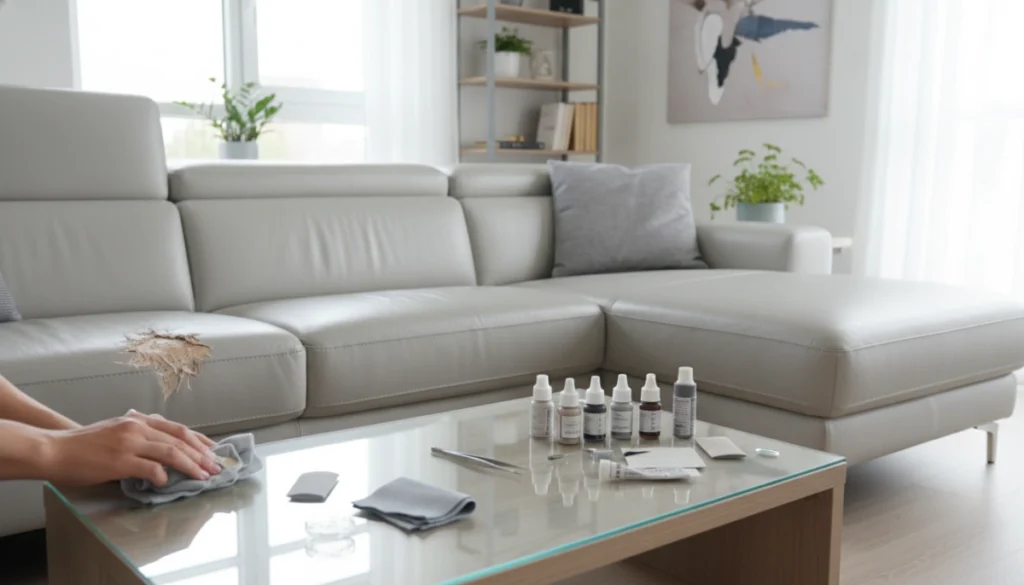
- Deep Gouges and Tears: These are structural. If you see white fibers or \”fuzz\” sticking out, the hide itself is torn and requires a multi-step restoration process.
Categorizing the Severity of Scratches
Before you attempt to repair cat scratch on leather sofa surfaces, you must determine how deep the damage goes. Not all claw marks are the same, and using the wrong technique can sometimes make the area look worse. I always recommend a quick assessment to choose the right tools for the job.
The Simple \”Finger Test\” for Scratch Depth
To accurately diagnose cat claw marks on leather furniture, run your fingernail gently across the scratch.
- Light: If your nail doesn\’t catch and you only see a change in color, it\’s a surface scuff.
- Medium: If your nail catches slightly but the leather isn\’t fuzzy or \”hairy,\” it\’s a shallow indent.
- Deep: If you see white or grey fibers poking out, or if the scratch feels rough and jagged, you have a deep gouge or a tear.
How to Fix Light Surface Scuffs
Light scuffs are mostly aesthetic. These happen when the cat’s claws graze the protective coating without piercing the hide. You can often remove cat scuffs from leather by simply re-hydrating the area.
- Apply a high-quality leather conditioner for cat scratches to the area.
- Massage the product in a circular motion to move the natural oils back into the scratch.
- In many cases, the mark will vanish or become nearly invisible once the leather is moisturized.
Repairing Medium Indents and Punctures
When the scratch is deep enough to leave a physical groove but hasn\’t torn through the fibers, you’re dealing with a medium-level issue. This usually requires a bit more than just oil. I find that a specialized leather scratch repair process involving a heat-activated or air-dry filler works best here. These products level out the \”valley\” created by the claw, restoring a smooth texture to your scratched leather upholstery.
Dealing with Deep Gouges and Torn Fibers
Deep gouges are the most technical to handle. This is where the leather fibers are actually shredded, creating a \”fuzzy\” appearance. To effectively repair leather sofa cat scratch damage of this magnitude, you must:
- Trim the fuzzy bits: Use small embroidery scissors to carefully snip away loose fibers.
- Apply Leather Filler: Use a flexible leather filler for pet scratches to bridge the gap.
- Sand and Recolor: Once the filler is dry, a light sanding and a coat of matching colorant are necessary to achieve an invisible leather scratch repair.
| Scratch Type | Visual Cue | Best Repair Method |
|---|---|---|
| Surface Scuff | Light color change, smooth | Conditioner or Oil |
| Medium Scratch | Visible indent, nail catches | Filler and Binder |
| Deep Gouge | Torn fibers, \”fuzzy\” texture | Trimming + Heavy Filler + Recoloring |
Understanding these categories ensures that when you repair cat scratch on leather, you aren\’t over-treating simple scuffs or under-treating serious structural damage.
Essential Tools for Leather Sofa Pet Damage Repair
To fix cat scratches on a leather couch effectively, you need the right gear. Using the wrong materials can ruin the finish permanently, so I always advise sticking to items specifically designed for leather upholstery.
Must-Have Household Items for DIY Fixes
Before reaching for heavy-duty chemicals, start with these basics for cleaning and prepping the surface:
- Microfiber Cloths: Essential for applying cleaners without leaving lint behind.
- Mild Dish Soap: Mix with distilled water to remove oils from the scratch site.
- White Vinegar: Great for a gentle \”tack\” clean to help fillers stick.
- Scissors or Tweezers: To carefully trim away frayed fibers before starting the repair.
Professional DIY Leather Scratch Repair Kit Components
For anything deeper than a surface scuff, you’ll need professional-grade supplies. A high-quality leather making tool set provides the precision needed for fine detail work.
| Tool | Purpose |
|---|---|
| Leather Filler | Fills in deep gouges and punctures to level the surface. |
| Fine-Grit Sandpaper | Smooths out dried filler (1200-2000 grit is best). |
| Leather Colorant | Matches your sofa\’s pigment to hide the repair. |
| Palette Knife | For spreading filler evenly into the claw marks. |
Why I Recommend High-Quality Leather Repair Patches
If your cat has gone to town on the corners of your sofa, a liquid filler might not be enough. This is where a best leather repair patch becomes a lifesaver.
- Durability: They offer a permanent fix for large-scale damage that filler can\’t bridge.
- Ease of Use: Most are peel-and-stick, making them the fastest way to repair scratched leather upholstery.
- Texture Matching: Modern patches come in various grains to blend seamlessly with your furniture.
Having a comprehensive professional leather craft tool kit on hand ensures you have the needles, threads, and edge tools required if you need to reinforce a seam alongside the surface repair.
Step-by-Step Guide: How to Repair Cat Scratch on Leather Sofa
Prepping the Surface: Cleaning and Trimming Fibers
Before starting any repair, the area must be completely clean. I always begin by using a specialized leather cleaner to strip away oils and dirt that prevent adhesives from sticking. If you see frayed, fuzzy fibers poking out from the cat claw marks on leather furniture, use a pair of sharp embroidery scissors to trim them flush. Do not pull on the fibers, as this can enlarge the holes; simply snip them so the surface is smooth.
Restoring Color to Light Surface Scuffs
For minor scuffs where the leather isn\’t punctured but the color is gone, a recoloring balm or leather conditioner for cat scratches works wonders. I apply a small amount of pigment with a sponge, blending it into the surrounding area. If you are dealing with more than just light wear, following a detailed guide on how to repair leather furniture ensures you maintain the material\’s integrity while restoring its look.
How to Apply Leather Filler for Medium Damage
If the scratches have left \”valleys\” or indentations, you’ll need a leather filler for pet scratches. This putty-like substance fills the gaps to create a level surface.
- Apply: Use a palette knife to spread a thin layer of filler into the scratch.
- Level: Wipe away excess filler so it sits only inside the damaged area.
- Dry: Let it air dry completely. For faster results, use a hair dryer on a \”cool\” setting.
- Sand: Once dry, lightly sand with 1200-grit sandpaper to ensure a seamless transition.
Advanced Techniques for Deep Gouge Repair
When the leather is actually torn or gouged, structural support is necessary. I use a sub-patch (a small piece of fabric) inserted behind the hole to provide a base. Apply a flexible leather glue to the underside of the leather and press it onto the sub-patch. Once the bond is secure, follow the filler and recoloring steps to repair scratched leather upholstery so the damage becomes virtually invisible.
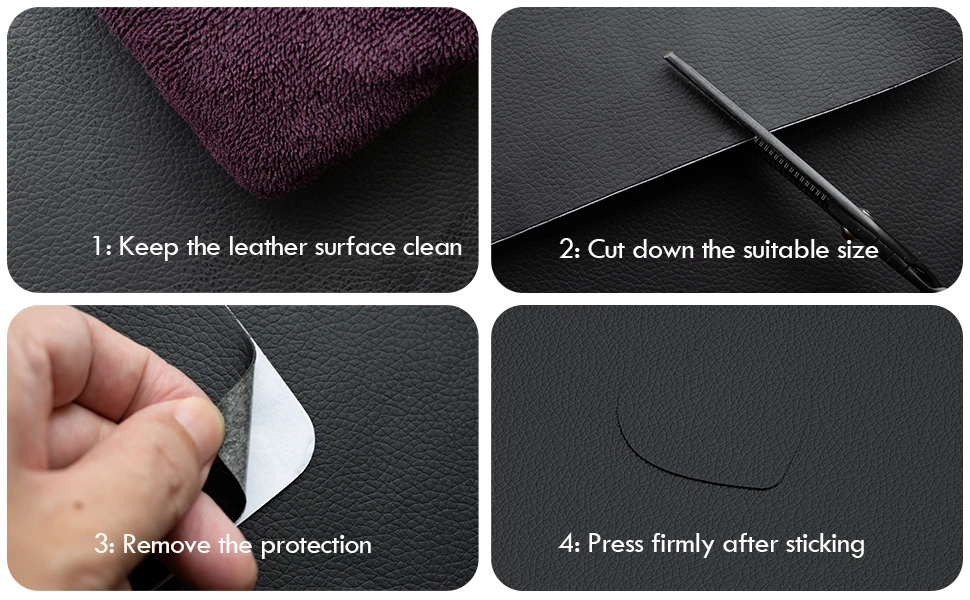
Applying Invisible Leather Scratch Repair Patches
For those who want a fast, durable solution without messing with dyes and fillers, I highly recommend using self-adhesive leather patches. These are specifically designed for an invisible leather scratch repair and work exceptionally well on high-wear areas like armrests or seat cushions.
| Step | Action | Pro Tip |
|---|---|---|
| Measure | Cut the patch to size with rounded corners. | Rounded edges are less likely to peel over time. |
| Peel | Remove the adhesive backing carefully. | Avoid touching the adhesive with your fingers. |
| Stick | Press firmly from the center out to the edges. | Use a heavy book to apply pressure for 30 minutes. |
Using a high-quality leather repair patch is often the most reliable way to hide cat scratches on sofa surfaces when the damage is too clustered for individual filler applications.
Common DIY Mistakes to Avoid
When figuring out how to repair cat scratch on leather sofa damage, the goal is restoration, not just a temporary cover-up. I’ve seen many owners turn a minor scuff into a permanent eyesore by using the wrong materials. Avoiding these common pitfalls will save your furniture and your budget.
Why You Should Skip Household Oils
It is a common myth that olive oil or vegetable oil can hide cat scratches on a sofa. While it might look better for an hour, it causes long-term destruction:
- Rancidity: Food-based oils eventually rot inside the leather fibers, leading to unpleasant odors.
- Permanent Staining: These oils saturate the hide, creating dark, greasy spots that are impossible to lift.
- Bonding Issues: If you later decide to apply a professional self-adhesive leather patch, the oil residue will prevent the adhesive from sticking, making a proper leather sofa pet damage repair impossible.
The Danger of Over-Sanding Leather
Sanding is often required to smooth out the \”fuzz\” created by cat claws, but it is easy to overdo. Sanding too aggressively removes the protective top coat and thins the leather. Once the natural grain is sanded away, the area will look flat and \”bald\” compared to the rest of the couch. Always use a high-grit sandpaper (around 1000-1200) and a very light touch.
Testing Products on Hidden Areas First
Never apply a DIY leather scratch repair kit or recoloring balm directly to the center of a cushion. Every leather dye reacts differently based on the tanning process. I always recommend testing on a small, inconspicuous area—like the underside of the frame or inside a seam—to ensure the color match is perfect and the chemical doesn\’t cause the finish to peel.
| DIY Mistake | Impact on Leather |
|---|---|
| Using Super Glue | Dries too hard and causes the leather to crack when sat upon. |
| Applying Heat | Using a hair dryer on high can shrink and shrivel leather fibers. |
| Overfilling | Using too much leather filler for pet scratches creates a stiff, unnatural lump. |
Skipping these shortcuts ensures your repair scratched leather upholstery efforts look professional and last for years rather than days.
Preventing Future Cat Scratches
Repairing damage is one thing, but stopping it at the source is how I protect my furniture long-term. To effectively prevent cat scratching leather upholstery, you need a strategy that addresses both the cat\’s instincts and the leather\’s physical state.
Effective Alternatives and Deterrents
- Redirect the Behavior: Place high-quality sisal scratching posts or cardboard loungers immediately next to the sofa corners.
- Use Scent-Based Deterrents: Cats have sensitive noses. Applying a pet-safe citrus or eucalyptus spray to the base of the sofa makes the area unappealing to them.
- Protective Barriers: Clear adhesive guards or stylish textured throws can act as a physical shield while you train your pet.
Maintenance and Nail Care
Keeping claws blunt is the easiest way to minimize damage depth. I recommend a bi-weekly nail trimming schedule or using soft claw caps for indoor cats. Furthermore, keeping your furniture hydrated is a secret weapon. Applying a specialized leather conditioner for cat scratches prevention keeps the material supple. Dry leather is brittle and catches claws more easily, whereas well-conditioned leather allows claws to glide off with less resistance.
Protecting the Surface
If your cat has a \”favorite\” spot, it’s worth being proactive. I often use a self-adhesive leather patch as a reinforced layer on hidden areas or lower corners that face the most abuse. Knowing how to repair cat scratch on leather sofa is a great skill, but maintaining a slick, conditioned surface and providing better scratching options will save you time and money on future restorations.
When to Call a Professional for Leather Sofa Pet Damage Repair
I always advocate for DIY when a fix is manageable, but some cat claw marks on leather furniture require a specialist\’s touch. While knowing how to repair cat scratch on leather sofa surfaces is helpful for minor scuffs, deep structural damage is a different story.
Signs the damage is beyond home repair
- Extensive Shredding: If the cat has turned a corner into a \”fringe,\” a simple filler won\’t hold the weight of the material.
- Structural Tears: Large rips that expose the internal foam or frame cannot be fixed with standard patches.
- Antique or Designer Leather: High-value pieces often require specific dye matching that only a professional leather couch restoration expert can provide.
- Failed DIY Attempts: If a previous repair looks patchy, sticky, or is peeling, it’s time to stop.
DIY Savings vs. Professional Restoration Costs
| Factor | DIY Repair | Professional Service |
|---|---|---|
| Cost | $20 – $60 (Average kit cost) | $200 – $600+ (Varies by damage) |
| Time | 1 – 3 hours of active work | 3 – 7 days (including transport) |
| Result | Great for \”good as new\” look | Flawless, invisible finish |
If you encounter split seams or heavy tearing during a leather sofa repair cat scratch project, using a 16-piece professional leather sewing set can help stabilize the area. However, if you are uncomfortable with color matching or the damage spans more than 20% of the cushion, I recommend calling a pro to protect your investment. Knowing when the damage exceeds your skill level prevents further permanent mistakes.
FAQs: How to Repair Cat Scratch on Leather Sofa
Can I use olive oil to hide cat scratches?
I strongly advise against using olive oil or any vegetable oils. While they might temporarily hide cat scratches on a sofa, they eventually go rancid, create unpleasant odors, and can permanently darken the leather. Instead, use a dedicated leather conditioner for cat scratches to safely nourish the material and blend in light scuffs.
How do I fix cat scratches on bonded leather?
Bonded leather cat damage fix is unique because the material tends to peel. For this type of leather, traditional fillers often fail. I recommend using a high-quality leather couch patch kit to cover the area. This prevents further peeling and provides a smooth, uniform surface that mimics the original texture.
How long does a DIY leather repair last?
A proper DIY leather scratch repair can last for several years if you use professional-grade materials. The longevity depends on:
- Surface Preparation: Cleaning the area thoroughly before starting.
- Product Quality: Using high-bond fillers and pigments.
- Maintenance: Regularly conditioning the leather to keep it supple.
Are leather repair patches permanent?
Yes, modern adhesive patches are designed for permanent use. If you choose a premium leather repair patch, the medical-grade adhesive creates a lasting bond that withstands daily sitting and movement. These are the most effective way to repair scratched leather upholstery when the damage is too deep for simple recoloring.