
Common Types of Damage Requiring Car Leather Seat Repair
Let\’s face it: your car seats endure a massive amount of daily abuse. From the friction of sliding in and out to the baking heat of the summer sun, your upholstery is constantly under attack. Before we dive into how to repair car leather seat issues, we need to identify exactly what you are up against. Understanding the damage is the first step toward a flawless restoration.
Here are the most frequent culprits we see when dealing with auto leather seat repair:
- Tears and Rips: These are usually caused by physical trauma. Maybe it was a sharp key in your back pocket, a zipper, or just the repeated stress of friction as you enter and exit the vehicle. This is often why you need to repair torn driver seat upholstery more than any other spot.
- Cracks and Fading: Leather is skin, and like skin, it dries out. Long-term exposure to UV rays and heat without proper conditioning leads to unsightly webbing and cracks. Eventually, you’ll find yourself looking for a way to fix cracked car leather before it splits completely open.
- Scuffs, Scratches, and Burns: Whether it’s a cigarette burn on car seat surfaces or a scratch from a pet\’s claws, these localized damages can ruin the look of an entire interior.
- Holes and Worn Bolsters: The side bolster (the raised edge of the seat) takes the brunt of your weight every time you get in the car. This high-wear area is notorious for developing holes and needing leather bolster wear repair.
Identifying these issues early prevents them from spreading and becoming a costly nightmare. Whether it is a simple scuff or a deep tear, knowing the damage type helps you choose the right leather repair car seat strategy.
Would you like me to outline the next section on \”Assessing the Damage: DIY or Professional Help?\” to help readers decide on the best repair path?
Assessing the Damage: DIY or Professional Car Leather Seat Repair
Before diving into a repair, I always take a moment to evaluate the severity of the wear. Deciding between a quick home fix and hiring a professional depends entirely on whether the damage is cosmetic or structural.
When to Choose DIY Repair
If you are looking to repair car leather seat issues that are strictly cosmetic, doing it yourself is the smartest move. This approach is perfect for:
- Small Tears: Cuts or rips smaller than 2 inches (about the size of a credit card width).
- Surface Scuffs: Light scratches from keys or jeans rivets.
- Cracks: Surface-level aging where the leather hasn\’t split all the way through.
For these minor issues, you can easily restore the look using a simple DIY leather seat patch or a filler. In fact, applying a leather repair gel is often all it takes to fill in cracks and stop them from spreading, saving you a trip to the shop.
When to Call a Professional
Sometimes, the damage is too deep for a quick patch. You should consider calling a mobile car upholstery service if you face:
- Deep Structural Damage: If you can see the yellow foam cushioning or if the foam is crumbling.
- Large Rips: Tears that span across main panels or seam separations.
- Color Matching Issues: If you have a custom or rare interior color that is impossible to match with standard kits.
In these cases, the reupholster vs repair car seats debate leans toward reupholstery, as simple adhesive solutions won\’t hold up against the structural tension.
Cost Breakdown: DIY vs. Pro
The price difference is massive. A typical DIY car seat leather repair project will cost you under $50, covering the kit and materials. Conversely, professional repairs generally range from $100 to over $500 per seat, depending on the labor and leather grade required.
Quick Comparison: Making the Choice
| Feature | DIY Repair | Professional Repair |
|---|---|---|
| Cost | Low (<$50) | High ($100–$500+) |
| Best For | Scuffs, small holes, fading | Large tears, foam repair, complex stitching |
| Time Required | 1–2 Hours | Days (scheduling + labor) |
| Durability | Good for surface wear | Excellent for structural integrity |
| Skill Level | Beginner-friendly | Expert skills required |
Would you like me to detail the specific tools and materials you\’ll need to start your DIY repair?
Tools and Materials Needed for DIY Car Leather Seat Repair
Getting professional results at home doesn\’t require a commercial workshop. To handle a standard car leather seat repair, you just need to gather the right supplies. Whether you are fixing a small scratch or a large tear, having the correct toolkit ensures the repair lasts.
Essential Basics for Every Repair
Before you start any auto interior leather dye job or patching process, make sure you have these basics on hand:
- Leather Cleaner: Essential for removing grease and oils to ensure adhesives stick.
- Sandpaper (600-grit): Used to smooth out rough edges around a leather car seat tear repair.
- Adhesive and Sub-patch: Critical for backing larger holes to provide structural support.
The No-Fuss Solution: Micter Patches
If you aren\’t interested in mixing compounds or sanding for hours, a simple patch is your best friend. For common issues like a cigarette burn on car seat or a rip in the bolster, I recommend using a high-quality DIY leather seat patch.
This approach skips the mess. You can use our reliable self-adhesive leather patch to instantly cover holes and tears. It effectively provides a \”simple patch and the leather is as good as new\” result without needing heat guns or specialized tools.
Kits for Complex Restorations
For those tackling deep cracks or a full car seat upholstery restoration, you might need a more advanced leather repair kit for vehicles. These typically include:
- Leather Filler: A paste used to fill in deep cracks and level the surface.
- Colorant: Required for color matching leather repair to blend the repaired area seamlessly with the rest of the seat.
Next Step: Would you like me to detail the specific cleaning methods in \”Step 1\” to ensure your patch adheres perfectly?
Step-by-Step Guide to Car Leather Seat Repair
Fixing your ride shouldn\’t be a headache. Whether you are dealing with a repair torn driver seat scenario or general leather bolster wear repair, following a strict process ensures the fix actually lasts. Here is how I handle a typical car leather seat repair to get professional-looking results right in your driveway.
Step 1: Clean the Area Thoroughly
You cannot skip this. Adhesives and fillers will not stick to dirt, body oils, or dashboard conditioners. Use a dedicated leather cleaner or mild soapy water to scrub the area. Ensure the leather is completely dry and free of grease before moving on.
Step 2: Prepare the Damage
If the leather is jagged, the repair will look messy. Trim away any loose fibers or dangling edges with small scissors. For a fix cracked car leather job, lightly sand the area with fine-grit sandpaper to create a smooth base for adhesion.
Step 3: Apply Backing or Filler
For deep rips or holes where the foam is exposed, you might need a sub-patch (backing cloth) inserted behind the leather. If there is a depression, use a leather filler to level the surface.
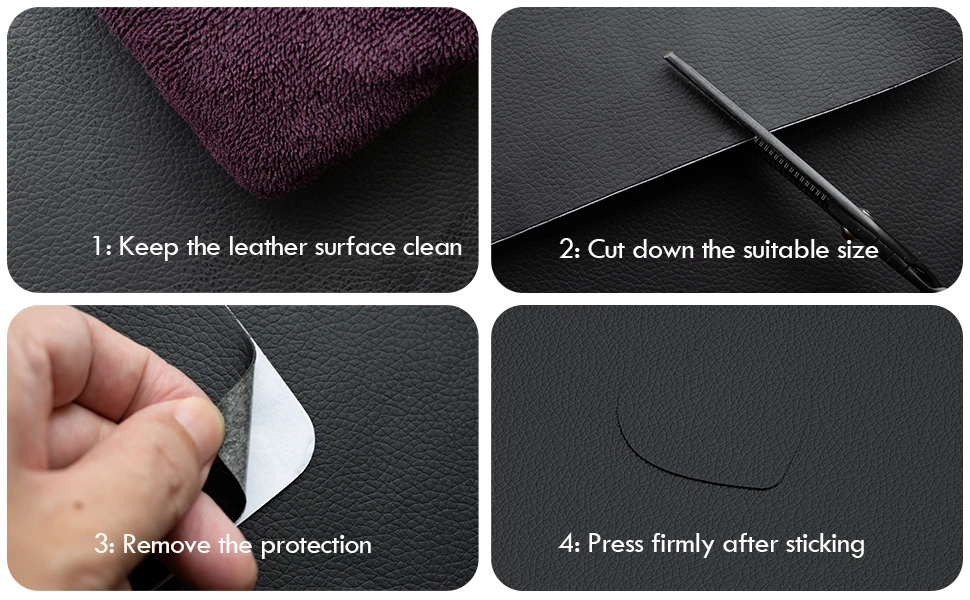
Step 4: Use a Patch (The Easy Way)
This is where we simplify things. Instead of waiting for liquid compounds to dry, I prefer using our self-adhesive leather patches for an instant fix.
- Cut to size: Cut the patch slightly larger than the damage.
- Round the corners: This prevents the patch from peeling up later.
- Peel and Press: Remove the backing and press it firmly over the tear.
A simple patch and the leather is as good as new. This is the most efficient method for a DIY leather seat patch because it mimics the texture of real leather immediately.
Step 5: Color Match and Dye
If you aren\’t using a pre-colored patch or need to blend the edges of a filled crack, color matching is key. You can use our leather dye marker pens to touch up scuffs or blend the repair into the surrounding upholstery for a seamless look.
Step 6: Seal and Cure
If you used liquid fillers or dyes, apply a leather sealant to protect the color. Allow the car seat leather repair to cure fully—usually 24 hours—before sitting on it.
Pro Tips for Best Results
- Work in the shade: Direct sunlight can make products dry too fast or bubble.
- Test your colors: Always test dyes or patches in a hidden area first.
- Apply pressure: When using a patch, applying firm pressure (or even using a hairdryer on low heat) helps the adhesive bond permanently to the auto leather seat repair area.
Would you like me to help you choose the right patch color for your specific car model?
Why Choose a Simple DIY Leather Seat Patch?
When I look at the options for car leather seat repair, I often see complex kits that require mixing dyes, applying heat, and waiting hours for fillers to cure. While those have their place, sometimes you just need a reliable, instant solution. That is exactly why I recommend a simple peel-and-stick approach for most drivers.
Using our high-quality self-adhesive faux leather changes the game. You don\’t need heat guns, messy glues, or special tools. It is designed to provide a leather car seat tear repair that is durable enough to withstand daily friction but simple enough that anyone can apply it in seconds.
Immediate Benefits of Using Micter Patches
- Zero Downtime: No drying or curing time; you can drive immediately.
- Strong Adhesion: Designed to stick firmly to vinyl and leather, ensuring the edges don\’t peel up.
- Realistic Texture: The grain mimics natural leather, making it great for a vinyl seat hole fix that blends in visually.
- No Heat Required: Eliminates the risk of damaging your seat further with irons or heat tools.
Comparison: Patch vs. Liquid Repair
| Feature | Micter Leather Patch | Traditional Liquid/Filler Kit |
|---|---|---|
| Application Time | 1–2 Minutes | 2–24 Hours |
| Tools Needed | Scissors only | Spatula, Heat Gun, Sandpaper |
| Skill Level | Beginner | Intermediate/Advanced |
| Best Use | Repair torn driver seat, holes, cuts | Fine surface cracks, color fading |
This method is ideal for common high-wear areas. If you are dealing with leather bolster wear repair or a rip on the armrest where the fabric is constantly being rubbed, a solid patch offers a physical barrier that liquid fillers often can\’t match. We have seen countless real-user scenarios where a simple cut-to-size patch turned a ragged, ugly hole into a smooth, protected surface, keeping the interior looking sharp without the high cost of a professional upholsterer.
Would you like me to create a quick checklist for maintaining your leather seats after applying a patch?
Prevention and Maintenance Tips for Long-Lasting Upholstery
You don\’t want to be constantly dealing with car leather seat repair; the goal is to keep your interior looking showroom-fresh for as long as possible. A little bit of proactive care prevents the need for major restoration work later.
Here is how I recommend protecting your investment:
- Regular Cleaning and Conditioning: Dirt and body oils act like sandpaper on leather finishes. Wipe your seats down weekly and apply the best leather conditioner for cars every few months to keep the material supple. This is the number one way to prevent leather seat cracks.
- Sun Protection: UV rays are leather\’s worst enemy. Whenever possible, park in the shade or use a windshield sunshade. Prolonged exposure dries out the hide, leading to fading and brittle surfaces.
- Watch for Sharp Objects: Keys, tools, and even stiff rivets on jeans can snag the upholstery. Be mindful of what you put on the seats to avoid accidental tears and rips.
- Routine Inspections: Give your seats a quick check when you wash your car. Catching a small scuff now saves you from a full repair torn driver seat job later.
If you do notice a small bolster wear spot or a tiny nick during your inspection, address it immediately. Keeping a set of self-adhesive PU leather patches in your glove box is a smart move for instant reinforcement before the damage spreads.
Next Step?
Would you like me to create a quick checklist for a \”Weekly Car Interior Maintenance Routine\” to help you stay on track?