Why Does Leather Crack in the First Place?
I constantly see people frustrated when their premium leather goods start showing ugly, web-like fractures. To understand why you need to apply leather protection cream to prevent cracks, you first need to understand the root causes of the damage. Leather is an organic material, much like our own skin, and it requires a consistent leather care routine to survive daily life.
Loss of Natural Oils and Hydration
When leather is tanned, essential oils are locked inside to keep it soft. Over time, these oils naturally evaporate into the air.
- The Result: The material loses its supple texture, becoming stiff, dry, and highly prone to breaking.
- The Reality: Routine deep leather hydration is mandatory. Without restoring those oils, the leather fibers lose their flexibility and snap under pressure.
UV Damage and Heat Exposure
Direct sunlight and fluctuating temperatures are leather\’s worst enemies, making UV protection for leather a non-negotiable step for car seat leather protection and sun-exposed furniture.
- The Impact: UV rays literally bake the material, accelerating the evaporation of its natural moisture barrier.
- The Danger: Intense heat causes the leather fibers to shrink, pull apart, and eventually crack under the tension.
Friction and Daily Wear
Every time you slide into your vehicle or sit on your favorite sofa, you create friction.
- Surface Wear: Constant rubbing degrades the factory topcoat, leaving the raw hide exposed to abrasive dirt and damaging body oils.
- Structural Stress: Repeated flexing in the exact same spots weakens the structural integrity of the hide. Without a high-quality leather conditioner acting as a protective buffer, the daily grind physically tears the leather down.
The Science Behind Leather Protection Cream
When we apply leather protection cream to prevent cracks, we aren\’t just making the surface look shiny. The process relies on active ingredients penetrating the material to preserve its structural integrity. Think of it as essential skincare for your furniture, jackets, or car interiors.
Creating a Moisture Barrier
Leather is a highly porous material that reacts constantly to its environment. A quality protection cream acts as a vital, invisible shield.
- Locks in hydration: It seals the natural oils inside the fibers, delivering deep leather hydration that stops drying from the inside out.
- Blocks external elements: This specialized moisture barrier stops humidity, body oils, and sweat from warping or degrading the material over time.
Advanced Stain Prevention
Accidental spills happen, but they do not have to become permanent marks on your valuable items.
- Pore sealing: The protective cream fills the microscopic pores across the leather\’s surface.
- Effortless cleanup: Because liquids are forced to sit on the surface instead of soaking into the dye, stain prevention becomes incredibly effective. You can simply wipe away coffee, ink, or water spills before they cause lasting damage.
Maintaining a Supple Texture
Dry leather inevitably becomes brittle, which directly causes tearing and flaking. By using a high-quality leather conditioner or protection cream, we actively lubricate the internal protein fibers. This crucial step keeps the material highly flexible and maintains a supple texture even under heavy daily friction. If you neglect this routine and the fibers snap, you will eventually have to figure out how to repair a leather couch rip instead of just doing basic upkeep. Routine application is the smartest way to prevent leather peeling and restore dry leather back to its factory-fresh feel.
Step-by-Step Guide: How to Apply Leather Protection Cream Effectively
To truly lock in deep leather hydration and maintain a supple texture, you need the right application technique. Here is my proven method to apply leather protection cream to prevent cracks and keep your items looking brand new.
- Step 1: Prep and Clean the Leather
Before applying any leather conditioner, you must remove all surface dirt and body oils. Applying cream over a dirty surface simply traps the grime inside the pores. If you spot any deep scratches or significant wear during this cleaning phase, it is highly recommended to properly repair your leather furniture before moving on to the conditioning step. - Step 2: Test an Inconspicuous Area
Always test the cream on a hidden spot first, such as the underside of a cushion or the interior hem of a jacket. This guarantees the product will not discolor, stain, or permanently darken your specific type of leather. - Step 3: Apply the Cream in Circular Motions
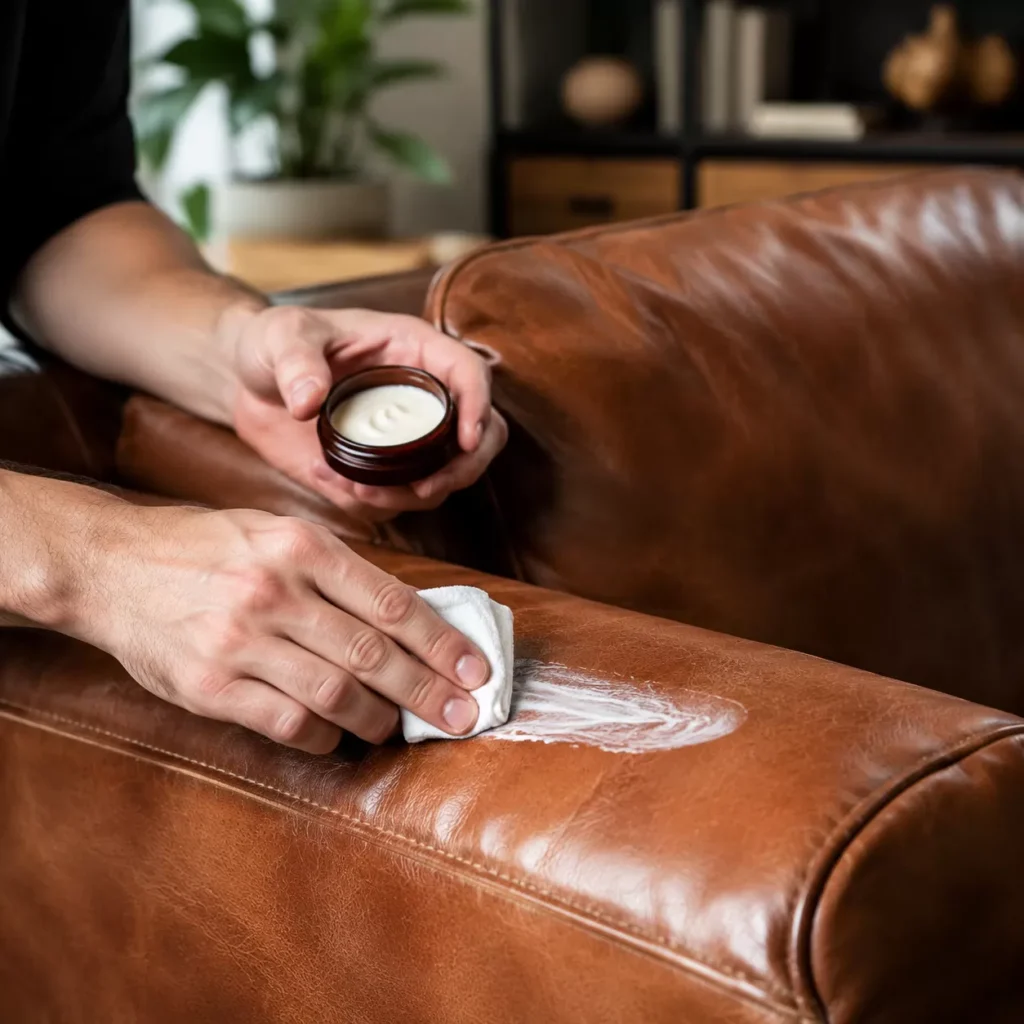
Using a soft, lint-free microfiber cloth or a dedicated applicator sponge, gently massage the cream into the surface. Using circular motions helps the product penetrate deep into the fibers, establishing a strong moisture barrier and ensuring reliable stain prevention. - Step 4: Allow Proper Curing Time
Do not rush the process. Let the cream sit and absorb for 15 to 30 minutes. This curing time allows the leather to soak up the necessary nutrients to restore dry areas and build up its natural defense against friction and UV rays. - Step 5: Buff to a Natural Finish
Finally, take a fresh, clean microfiber cloth and gently buff the entire surface. This crucial step removes any unabsorbed excess residue, leaving behind a smooth, natural finish that feels rich rather than greasy.
How Often Should You Condition Your Leather?
I always recommend establishing a solid leather care routine to keep your items looking pristine. You cannot just wait for damage to appear; proactive care is essential for longevity.
Routine Maintenance by Item Type
Different items face different levels of wear and tear. Here is a straightforward schedule to clean and condition leather effectively:
- Car Seats: Every 2 to 3 months. Constant UV exposure and temperature shifts require frequent attention.
- Leather Furniture: Every 6 months. Daily friction demands consistent moisture to stay soft.
- Jackets and Bags: Once or twice a year, depending on how often they are exposed to harsh weather.
Signs Your Leather is Crying Out for Hydration
If you slip up on your maintenance schedule, the material will clearly show it is thirsty. Watch for these exact warning signs:
- Stiffness: The surface feels rigid and tough rather than smooth and flexible.
- Dull Appearance: The color fades and loses its natural, rich sheen.
- Micro-lines: Tiny surface wrinkles begin to form. If you ignore this stage, the fibers will snap, and you will eventually have to learn how to repair cracked leather to save the item.
To avoid permanent damage, you must apply Leather Protection Cream to prevent cracks the moment you notice these changes. Using a high-quality leather conditioner is the most reliable way to restore dry leather and lock in essential hydration for the long haul.
Why Choose Mitcer for Your Leather Care Routine?
When it comes to extending the life of your favorite leather goods, having a reliable partner matters. We have built our reputation as a trusted Leather Repair Products Retailer & Wholesale Supplier, serving global customers who demand quality. Whether you are dealing with minor wear or need robust solutions like our specialized leather repair gel for surface restorations, Mitcer provides the exact tools needed for lasting results.
Deep Conditioning and Crack Prevention
Our Mitcer leather care supplies are specifically formulated for deep leather hydration. We know that the best defense against damage is proactive maintenance. When you apply leather protection cream to prevent cracks using our specialized formulas, you actively build a durable moisture barrier that blocks out everyday damage.
The Mitcer Advantage:
- Industrial-Grade Protection: Reliable formulations designed for both wholesale buyers and everyday consumers.
- Stain Prevention: Advanced ingredients that repel spills and block embedded dirt.
- Supple Texture: Nourishes deep into the fibers to restore dry leather and prevent peeling.
| Product Feature | Direct Benefit for Your Leather |
|---|---|
| Premium Leather Conditioner | Replenishes lost natural oils instantly to maintain flexibility. |
| Protective Barrier Formulation | Creates an invisible shield against friction and daily wear. |
| Smooth Consistency | Ensures effortless application, making your leather care routine fast and effective. |
We focus on delivering high-performance products that get the job done right. Rely on our deep-conditioning solutions to keep your leather furniture, car seats, and premium accessories in pristine condition year after year.
Frequently Asked Questions (FAQs)
Can leather protection cream fix already cracked leather?
No. When you apply leather protection cream to prevent cracks, you are acting proactively. The cream builds a moisture barrier that stops drying and cracking before it starts. Once the fibers are torn, a cream cannot fuse them back together. If you are dealing with severe damage, you will need the best leather crack filler for long-lasting repairs to bridge the gaps and rebuild the surface before applying any protective topcoat.
Is leather protection cream the same as a leather conditioner?
They are closely related but serve slightly different primary functions in a proper leather care routine.
- Leather Conditioner: Designed to penetrate deep into the hide to restore dry leather and replenish lost natural oils.
- Protection Cream: Focuses heavily on the surface. It provides advanced stain prevention, blocks UV damage, and locks in the hydration provided by the conditioner to maintain a supple texture over time.
Can I use this on faux leather or PU leather?
Generally, no. Genuine leather is porous and absorbs the cream to stay hydrated. Faux leather and PU (polyurethane) leather are synthetic plastics. A traditional cream will simply sit on top of the surface, leaving a greasy residue. To prevent leather peeling on synthetic materials, you need a specialized synthetic cleaner and protector designed specifically for non-porous vinyl and PU surfaces.